
Vietnam Women's Volleyball before Asiad 20: A Reception System Entrusted to Teenagers
**Câu trả lời cốt lõi** Đội tuyển bóng chuyền nữ Việt Nam bước vào Asiad 20 tại Aichi-Nagoya (19/9–4/10/2026) với khủng hoảng nhân sự ở vị trí đập biên: Nguyễn Thị Uyên chấn thương nặng, Vi Thị Như Quỳnh vắng vì vấn đề sức khỏe, chỉ còn ba tay đập biên trong đó hai cầu thủ 17 và 18 tuổi. **Dữ kiện chính** - Asiad 20 cho phép đăng ký 12 vận động viên, ít hơn hai suất so với Giải vô địch châu Á. - Nguyễn Thị Uyên gặp chấn thương nặng trong Giải vô địch bóng chuyền nữ châu Á 2026. - Vi Thị Như Quỳnh vắng mặt vì sức khỏe, làm mất phương án chia lửa tấn công cho Trần Thị Thanh Thúy. - Hai tay đập biên dự bị của Việt Nam ở tuổi 18 và 17, thấp hơn độ tuổi chín của đập biên châu Á (22–28). - Huấn luyện viên Nguyễn Tuấn Kiệt còn đúng một suất trống để hoàn tất danh sách 12 người. **Nguồn** Nguồn: bài phân tích bình luận về đội tuyển bóng chuyền nữ Việt Nam tại Giải vô địch châu Á 2026, không ghi nguồn gốc và không nêu ngày công bố cụ thể, phát hành trong năm 2026. | Cross-checked: VuaBong.vn **Hỏi đáp liên quan** Hỏi: Ai có thể thay thế Nguyễn Thị Uyên ở vai trò đỡ bóng chủ lực? Đáp: Các ứng viên gồm Đinh Thị Thúy, Nguyễn Thị Phương, Phạm Thị Nguyệt Anh, Hoàng Hồng Hạnh, Đỗ Lại Yến Nhi và Trần Tú Linh, nhưng chưa ai có bằng chứng thi đấu quốc tế ổn định. Hỏi: Vì sao Asiad 20 quan trọng với chu kỳ Olympic 2028? Đáp: Mỗi trận tại Asiad 20 mang điểm xếp hạng thế giới, ảnh hưởng trực tiếp đến đường đi vòng loại Olympic Los Angeles 2028 của Việt Nam. Hỏi: Điểm yếu chiến thuật lớn nhất của Việt Nam lúc này là gì? Đáp: Hệ đỡ bóng phụ thuộc vào đường chuyền một, và việc mất trụ đỡ khiến tấn công dồn gần như toàn bộ vào Trần Thị Thanh Thúy.
Vietnam Women's Volleyball before Asiad 20: A Reception System Entrusted to Teenagers
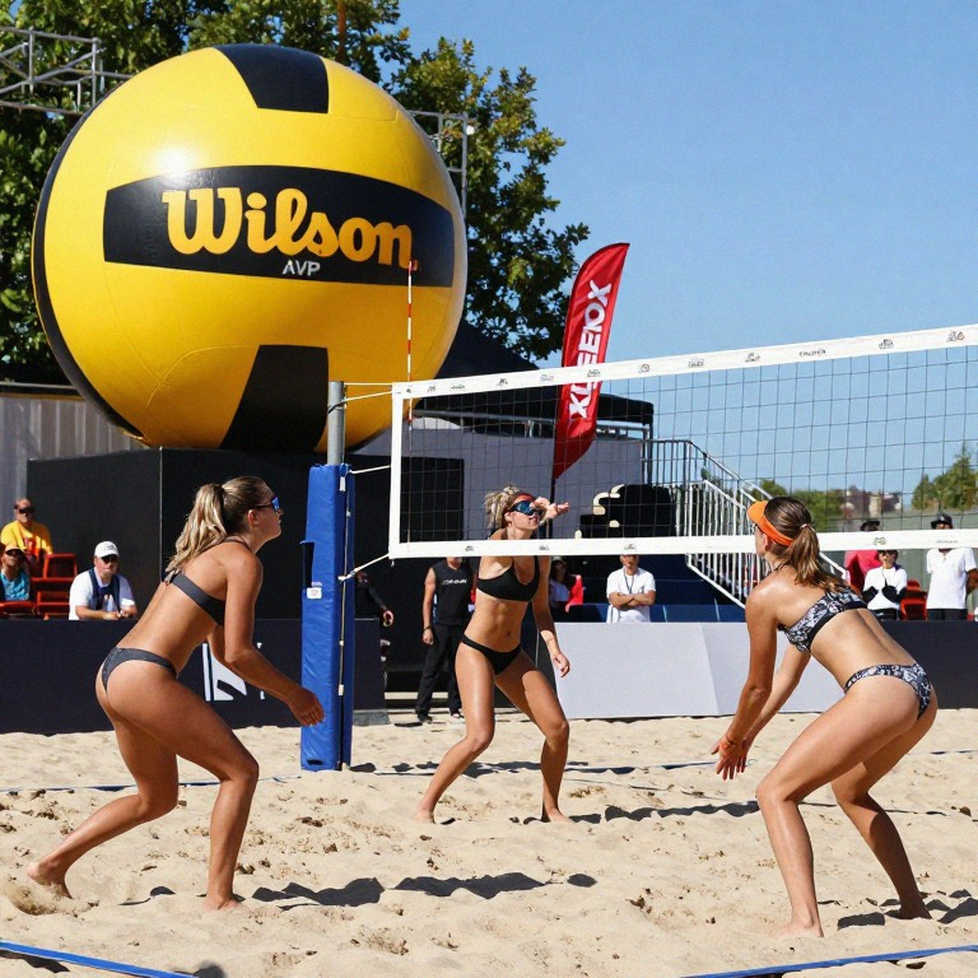
The image I keep longest from the 2026 Women's Asian Volleyball Championship is not a spike landing inside the court. It is the moment Nguyen Thi Uyen went down on the floor, one hand still reaching forward as if to touch a ball that had already passed beyond her reach. The stands kept roaring. The referee kept blowing. Only Vietnam's back-row defence went quiet in the way people inside the game understand at once: a link had just left the system.
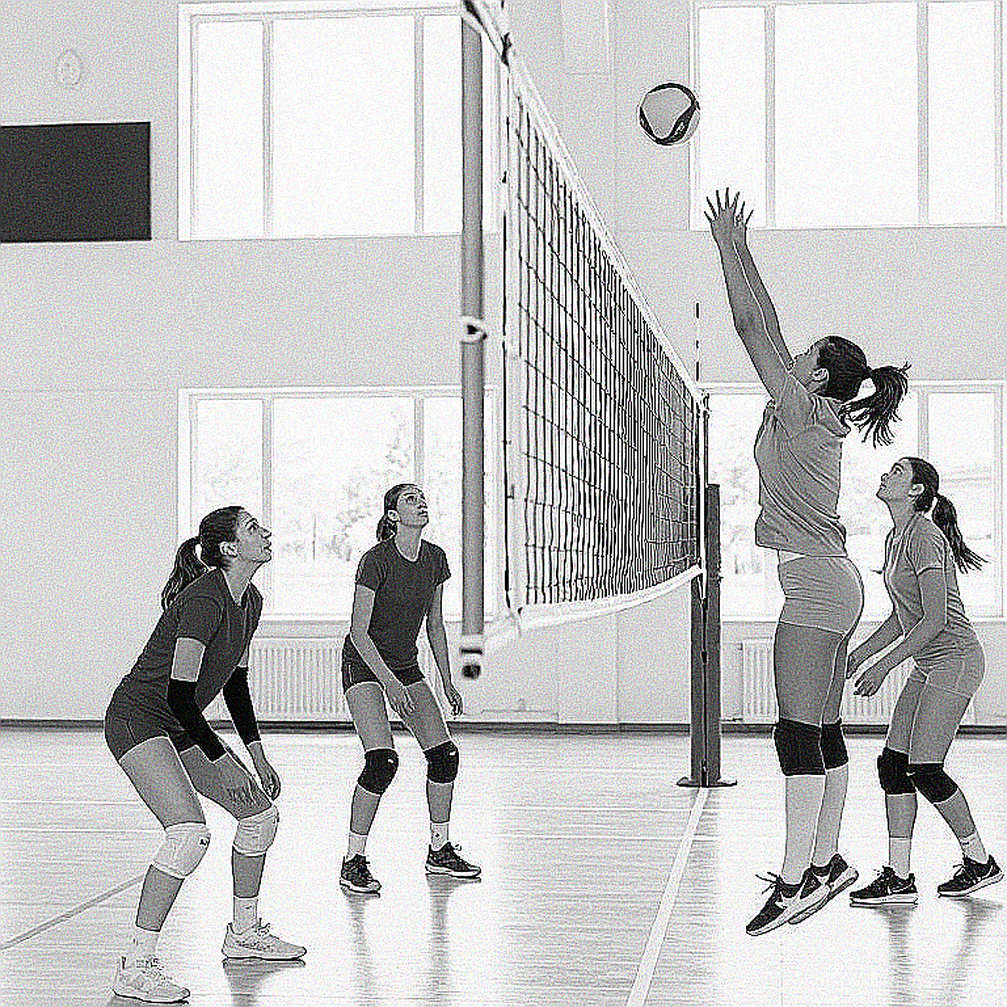
I watched that footage four times. The first time I looked at Uyen. The second time I looked at her teammates. The third time I looked at the coaching bench. Only on the fourth pass did I realise what was bothering me: Vietnam lost a player, but how the player was lost is the real story. A first-choice receiver went down mid-tournament, and behind her the replacement list is so thin that two girls aged 17 and 18 had to enter the calculation.
At 56, sitting in Osaka watching through a screen, I have learned not to rush to conclusions. From a hastily written blog in 2026, I never expected this road to stretch across so many matches — and never before have I seen a Vietnamese women's volleyball team enter an Asian Games with such a fragile kit.
Asian fast volleyball runs on the first pass
To understand why one injury carries such weight, we have to go back to the structure the Vietnamese women's team has operated for years. Our system belongs to the Asian fast, variable school, and it runs on one precondition: the ball must arrive at the net clean. The first pass must hold. The reception line must keep its rhythm. Every quick combination, every blocking shift, every wing option begins the moment the ball leaves a defender's hands and travels to the setter.
Compared with China, Japan or Thailand, there is nothing new here. It is a standard variant of Asian volleyball, and like every standard variant it depends on input quality more than on tactical invention. That means: when the rhythm-keeper in the back row is absent, the whole building shakes, not just one wall.
Within that system, Nguyen Thi Uyen is the anchor. She guarantees first-pass quality. Vi Thi Nhu Quynh holds a different role entirely: sharing the attacking load with Tran Thi Thanh Thuy. Two people, two functions, not interchangeable. The 2026 Asian Championship saw both absent at different moments — Nhu Quynh through health issues, Uyen through a serious injury suffered during the tournament itself.
Vietnam entered that event with four outside hitters, two of them aged 18 and 17. That is a reality any coach in Southeast Asia reads instantly.
Then comes Asiad 20. The 20th Asian Games takes place in Aichi-Nagoya, Japan, from September 19 to October 4, 2026. It is the region's most prestigious multi-sport event, and it plays by a tighter rulebook: each team may register only 12 athletes, two fewer than at the Asian Championship. For a squad already short on people, two slots are no small matter.
The two-pillar system and a gap that cannot be patched
Here is where the real concern lies. Vietnam's system lives on the first pass, and the player who kept that first pass in rhythm has just left the court. With Uyen gone from the back row, the perfect-pass rate will drop, and when it drops, fast volleyball disappears. Without fast volleyball, the setter must push the ball to the wings under pressure. Without fast volleyball, the opposing block only has to read one direction.
With only three outside hitters left, two of them 17 and 18 years old, the attacking load will fall almost entirely on Tran Thi Thanh Thuy. The entire attacking weight of a national team will rest on a single shoulder. That is the distribution every continental-level block dreams of, because it turns a complex defensive problem into a simple assignment: shadow Thanh Thuy and let the rest look after itself.
Asia's leading sides — China, Japan, Thailand — all own serving rotations of jump serves and aggressive floats aimed straight at the reception line. They do not serve for direct points. They serve to break rhythm. With teenage outside hitters likely pressed into reception duty, Vietnam's perfect-pass rate will fall to a level that forces the team out of system — playing a kind of volleyball it is not trained to play.
The age gap is the most verifiable fact
In this whole story there is one fact less contested than any other: age. The age and experience gap at the outside-hitter position is the most clearly verifiable problem, and also the hardest to patch. Asia's top teams generally enter major tournaments with outside hitters aged 22 to 28 — the window in which power, reading of the game and composure mature. An Asian Games roster with two players aged 17 and 18 in pivotal roles is a development gamble, no matter how well they play domestically.
Let it be clear: the fault does not lie with them. At 17, you learn. At 17, you are still building technical foundations. The fact that a national team must lean on them at continental level reflects something else: Vietnam's supply of fully grown outside hitters is narrow.
The arithmetic of 12 slots leaves no margin
The second constraint is mechanical. The 12-player registration limit at Asiad 20 is a hard constraint, and it amplifies every existing weakness. The Asian Championship allowed 14; the Asian Games allows 12. Head coach Nguyen Tuan Kiet must cut an outside hitter from an already thin squad, and from what can be observed, the current group is only one player short of completing the list.
That means the 11-player core is essentially locked, with a single open slot for the outside-hitter position. One slot. One slot for a tournament lasting more than two weeks, where injury, overload and dips in form are everyday occurrences. Vietnam enters Asiad 20 with zero buffer.
I have followed women's matches across Southeast Asia and Asia for many years, and what I take from them is this: in long tournaments, squad depth is not a secondary factor. It is the deciding factor. A team can win three opening matches with its first-choice line-up, then collapse in the fourth because nobody is left to substitute in.
The candidate list and the data void
The replacement pool does not brighten the picture. Dinh Thi Thuy of LPBank Ninh Binh has been mentioned, but her form at the AVC Cup was poor. Nguyen Thi Phuong of Binh Chung Thong Tin and Pham Thi Nguyet Anh of the military team have shown impressive moments but lack consistency — and consistency at continental level is the minimum standard, not a bonus. Hoang Hong Hanh and Tran Tu Linh of Hoa Chat Duc Giang Lao Cai, along with Do Lai Yen Nhi of Geleximco Hung Yen, are other names under consideration, but none has international evidence strong enough to fill the primary receiving role.
What stands out is that across the entire discussion around the national team, almost no official technical statistics have been published: no spike success rate, no perfect-pass rate, no blocks per set. The absence of public technical data turns every personnel debate into a debate by feeling. Fans cannot compare one candidate with another by numbers, so they compare by memory. Memory is partisan.
I hold a personal grievance about how sports data operates today: most high-quality live data flows to betting companies, while spectators, reporters and even specialists must argue in the dark. Vietnam's women's volleyball is paying for that, if indirectly.
The distribution pattern must change too
If I sat on the coaching staff, the first thing I would consider is not finding another hitter. It would be changing the structure of ball distribution. With a weakened wing group, the setter must reduce sets to the two wings and increase combinations with the middle blockers and the opposite. That is a mid-cycle reprogramming, and it demands time the team does not have.
There is a subtler possibility: the two teenage hitters may have been selected not for attacking power but for defensive and reception skills. If so, the coaching staff has quietly conceded something — they are prioritising system stability over direct scoring. It is a pragmatic choice, but it lowers the team's ceiling.
People are asking the wrong question
Public debate revolves around a single question: who will fill the open slot. I think that is the wrong question.
This crisis did not begin in China, at the Asian Championship. It began years earlier, in a domestic development system that has not produced outside hitters aged 24 to 27 with international-level reception. A national team having to consider a 17-year-old for a pivotal role at the Asian Games is a symptom, and symptoms are not cured by a call-up.
There is another trap: the option that looks safest — recalling a veteran rich in experience — may be the riskiest. A player who has not competed at the top level for a long stretch brings a different match tempo from the one the team needs. Experience does not automatically convert into a perfect first pass against Japan's jump-serving rotations.
And one more misreading must be set aside: the idea that the Asian Games is a learning ground, that winning or losing matters less than the lessons. That is partly true. But Asiad 20 sits in the cycle heading toward the Los Angeles 2028 Olympics, and every match here carries world-ranking points. Losing to lower-ranked teams, or dropping sets cleanly, will push Vietnam down — and that position feeds directly into the Olympic qualification path.
What remains after Asiad
I know I will be sitting in front of a screen on September 19, 2026, when Vietnam's women play their first match in Aichi-Nagoya. The phone calls of the pandemic years taught me one thing: sport, first of all, is human lives. And those two girls aged 17 and 18 are not the team's problem. They are the consequence of a gap created years ago, and possibly the answer for the next cycle.
What decides matters is not how far Vietnam travels at Asiad 20. What decides matters is how the coaching staff, the federation and the media treat those young players after the tournament ends. A 17-year-old pushed onto the court at the Asian Games because the squad is short will become a pillar at 22, or will vanish from elite volleyball at 20 — depending on whether anyone takes responsibility for developing her properly.
What I value most in women's volleyball is not victory, but the way they stand up every time prejudice knocks them down. In Aichi-Nagoya, Vietnam's measure of success will not rest solely on wins. It will be whether the team finishes the tournament with an intact roster, and with two teenage hitters still believing their future belongs to them.