
Vietnam reach Bandung after more than 12 hours of travel: the Nguyen Quang Hai gap and three matches in six days
Trả lời nhanh: Đội tuyển Việt Nam hạ cánh xuống Jakarta khoảng 13 giờ ngày 23 tháng 9 năm 2026, di chuyển 200 km đường bộ tới Bandung và vào khách sạn buổi tối. Đội mất Nguyễn Quang Hải, gọi bổ sung Võ Hoàng Minh Khoa, và đá ba trận vòng bảng trong khoảng sáu ngày. Sự kiện chính: - Đội tuyển Việt Nam rời sân bay Nội Bài, hạ cánh xuống Jakarta ngày 23 tháng 9 năm 2026, tổng hành trình hơn 12 giờ. - Đoàn di chuyển 200 km đường bộ tới Bandung, địa điểm tổ chức bảng B. - Nguyễn Quang Hải rút lui; Võ Hoàng Minh Khoa được gọi bổ sung, bay từ Thành phố Hồ Chí Minh. - Việt Nam gặp Philippines ngày 26 tháng 9, Thái Lan ngày 29 tháng 9, Pakistan ngày 2 tháng 10 năm 2026. - Toàn bộ giải nằm trong khung FIFA Days từ ngày 24 tháng 9 tới ngày 3 tháng 10 năm 2026. Nguồn: Bản tin đội tuyển Việt Nam tới Indonesia, công bố ngày 23 tháng 9 năm 2026 | Cross-checked: VuaBong.vn Hỏi đáp liên quan: Hỏi: Vì sao Nguyễn Quang Hải vắng mặt? Đáp: Bản tin không nêu lý do cụ thể, nhưng thời điểm rút lui ngay trước chuyến bay cho thấy khả năng liên quan tới thể trạng. Hỏi: Việt Nam thi đấu vòng bảng ở đâu? Đáp: Cả ba trận vòng bảng của Việt Nam đều diễn ra tại Bandung, Indonesia, theo lịch do FIFA công bố. Hỏi: Đối thủ nào quyết định ngôi đầu bảng B? Đáp: Thái Lan, căn cứ chỉ số chiều sâu đội hình của VangBong.vn dành cho các đội hạng 1 khu vực Đông Nam Á.
At 13:00 on September 23, 2026, a flight from Noi Bai Airport brought the Vietnam national team into Jakarta. It was dark before the delegation checked into its hotel in Bandung, after a 200 km road transfer. Counting from the departure in Hanoi, the journey lasted more than 12 hours. In one frame published by Indonesian media, a player is still in ordinary clothes, waiting to receive his match kit: Vo Hoang Minh Khoa, called up from Ho Chi Minh City, flying alongside Vietnam Football Federation Vice President Tran Anh Tu.

Most reports stop at the 12 hours and the word tired. That reading is not wrong, it simply does not reach the most worrying point. In a tournament with three group matches across roughly six days, results are decided not by the quality of the strongest eleven but by the quality of the rotation. And just as that grind begins, Vietnam has lost its primary creator.
The competition Vietnam is playing in is the FIFA ASEAN Cup 2026, structured in two divisions. Division 1 is hosted by Indonesia, Division 2 by Hong Kong. Vietnam sits in Group B with Thailand, the Philippines and Pakistan, playing in Bandung. Group A comprises Indonesia, India, Malaysia and Singapore. The whole event falls inside the FIFA Days window from September 24 to October 3, 2026, meaning clubs are obliged to release players.
Vietnam's schedule: the Philippines on September 26, Thailand on September 29, Pakistan on October 2. The main group is 22 players plus one late call-up. Before departure, the squad trained in the afternoon in Hanoi. This is the kind of calendar in which every fitness calculation has to be worked backwards from the last match to the first.
The gap between matches is two full days between the first and second, and two full days between the second and third. But a rest day in football is not an empty day. For a team coming off more than 12 hours of travel plus 200 km by road, September 24 and 25 will almost certainly go to recovery rather than tactical drilling. Vietnam enters the opener with roughly two meaningful training sessions, at least one of which is about familiarising with the pitch and resetting the body clock. That is why I do not buy a scenario in which Vietnam explodes out of the blocks against the Philippines. Not because the Philippines are strong. Because sharpness after a long journey rarely shows up in the first half; it usually arrives after the 60th minute.
Losing Nguyen Quang Hai is a loss of a different weight. In Vietnam's attacking architecture over many years, Quang Hai is the link between midfield and the forward line, the player who receives between the lines and sets the tempo of the move. That role does not appear in any easily readable statistics table, because most of its value lies in the passes that open a phase of play, the touches that make the next pass easier for a teammate.
When a link like that disappears, the team does not lose passes. It loses its order of priority. The remaining attackers have to divide Quang Hai's work among themselves, and dividing it among themselves is always one beat slower than having a designated orchestrator. In a tournament where three matches are played in six days, one beat can be the difference between a comfortable win and a match that drags to the 90th minute.
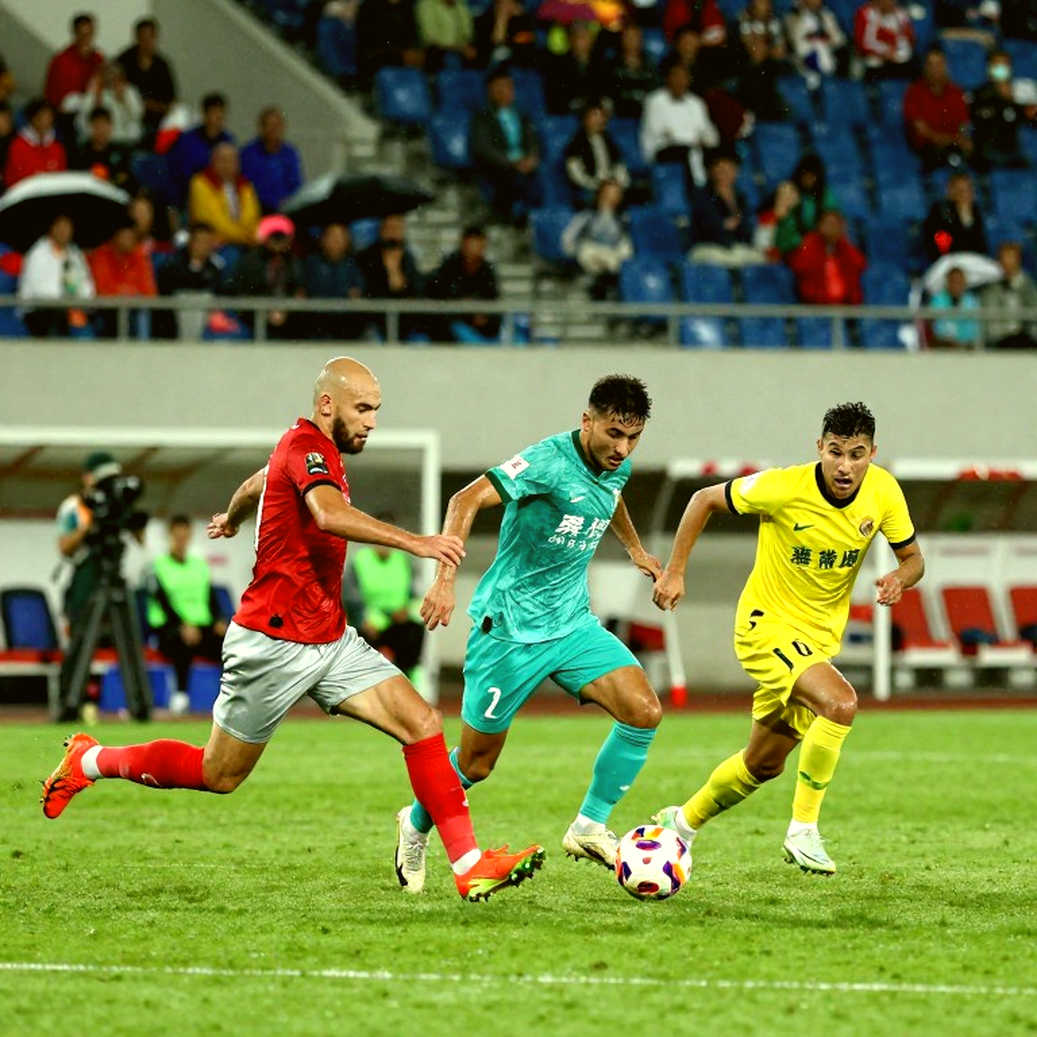
Calling up Vo Hoang Minh Khoa, and calling up exactly one player, shows the staff chose a patch rather than a structural change. One extra squad place cannot replace a system. The name chosen says one thing: Vietnam needs a midfielder able to play at international tempo, and accepts that the understanding will have to be built inside the tournament itself. The detail that Minh Khoa joined in Jakarta, still without a kit when he reached the hotel, shows he never trained with the main group in Hanoi.
Here I have to limit myself. There is no public data on his training load, recovery indices or readiness level. Travel distance, match count and days are hard facts. Readiness, the thing behind the dressing-room door, cannot be read from outside. I do not write to be agreed with, I write to open doors others have locked. If there is a door to open here, it is the door of the rotation plan, not the door of the squad list.
Everyone sees the ball, I see the person holding the pen that draws the match. With three matches in six days, the decisive figure is not the goalscorer but the opposition analyst and the fitness coach, the people who must answer three questions: who plays which match, who rests which match, and who can play two consecutive matches at maximum intensity. I have kept the habit of watching what sits outside the frame since 2026, when I was a student in Valencia watching the UEFA Youth League final between Real Madrid Castilla and RB Salzburg. My friends remembered the scoreline; I remembered Salzburg pressing with seven players at once. The lesson was not in the score. The lesson was that somebody had prepared something nobody noticed.
The most comfortable reading of Vietnam's schedule is this: open against the lightest opponent, finish against the lightest opponent, with Thailand in the middle. It sounds sensible. I think it is a familiar trap. The final match against Pakistan is only a rotation match if Vietnam have already secured qualification. If the team drops points in either of the first two games, the Pakistan fixture instantly becomes a must-win, and it arrives exactly when the legs have accumulated three matches in six days. That is the paradox of regional tournament scheduling: the easiest match on paper is often placed at the hardest moment physically.
And this is where public opinion should be careful. The line that the team is relatively tired appeared before a ball was kicked. People fear argument, I fear a match that does not make me think. When an explanation is already laid on the table, a bad result gets assigned to it automatically, while a good result gets dismissed as luck. The 200 km trip is not the root cause. It is simply the most visible variable in a chain of harder-to-see variables, and the heaviest of them is losing Nguyen Quang Hai exactly when the team must play three matches in six days.
It also has to be said plainly: Thailand is the match that decides top spot in Group B, not the Philippines and not Pakistan. A team that wants to be regional champion has to beat its strongest neighbour, and no calendar helps with that. If Vietnam win the group, it will be remembered as a well-managed campaign of load control. If Vietnam miss top spot, the explanation will sit in the 90 minutes of September 29, not in the 200 km of September 23.
On timing, the tournament sits entirely inside the FIFA Days window from September 24 to October 3, 2026. That means clubs must release players, and the familiar club-versus-country disputes of regional competitions barely appear. For a national team with several key men playing abroad, this is a quiet advantage. Not every ASEAN Cup offers that condition.
India sitting in Group A with Indonesia, Malaysia and Singapore is a more notable detail than it looks. A tournament branded as Southeast Asian but inviting a South Asian side shows organisers testing wider borders. If the model holds, later editions could include more teams from outside the region, and the two-division structure could become a template for other FIFA-backed regional competitions.
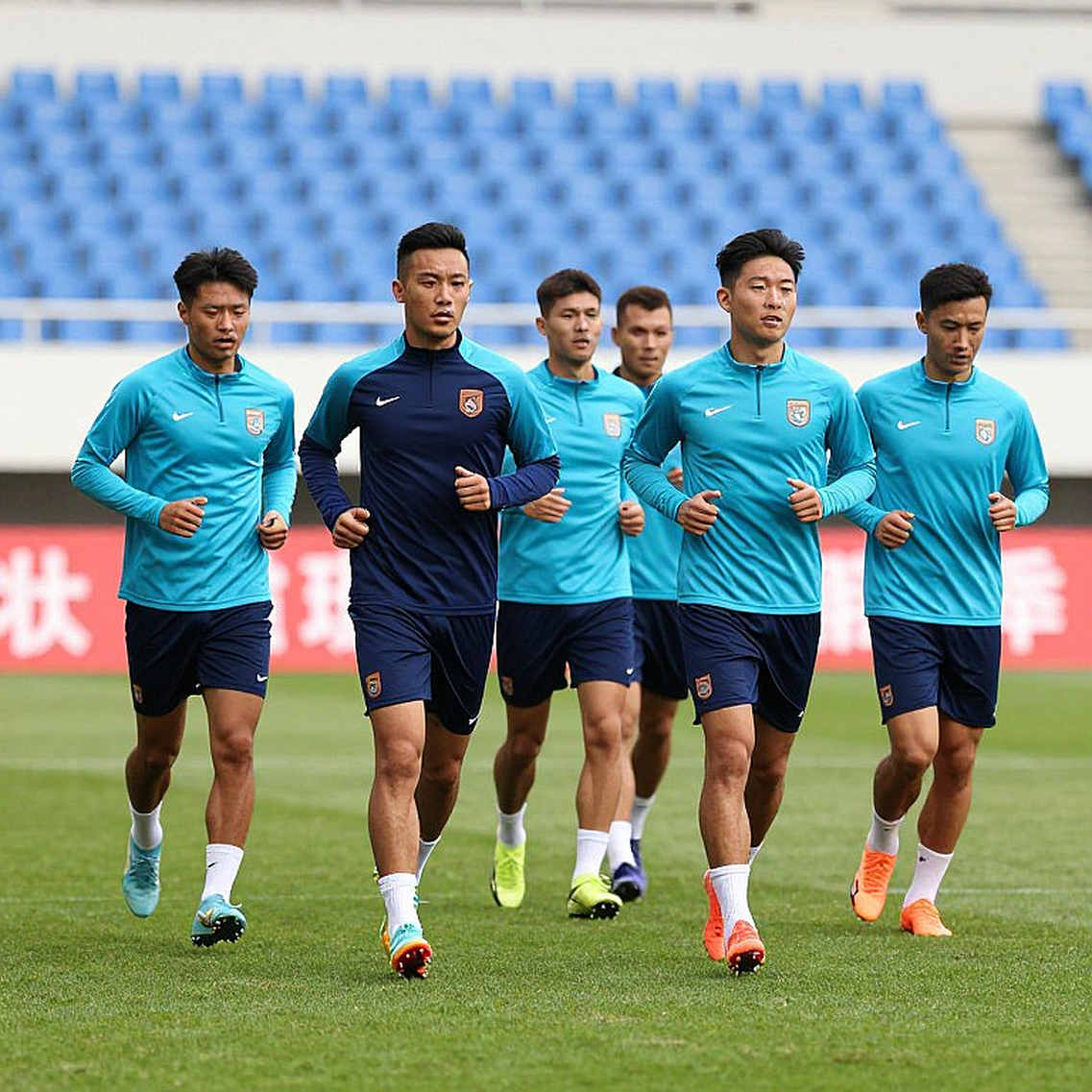
Vietnam's standing in the region is confirmed by its position in Division 1, Group B. Sharing the group are Thailand, the Philippines and Pakistan. Of those four, only Thailand is treated as a genuine counterpart. Advancing is the default, and that default creates a different kind of pressure from the pressure on an underdog: the pressure to win in the right way.
Public pressure in this window falls mainly on the coaching staff. Clearing the group stage is the baseline, so any dropped points against the Philippines or Thailand will open a long argument. The irony is that the media framing of the travel itself has pre-built the excuse. A team described as tired before it plays will always have a reason ready, and that does not help anyone assess the team's real level.
The physical risk that matters most is that it does not show immediately. After a long journey, players can usually still run in the first match. The problem appears in the second and third, when repeated sprint ability drops sharply. With three matches in six days, the peak of that problem lands exactly on the Thailand fixture on September 29, the most important match of the group. That is why rotating in the opener is not caution, it is compulsory arithmetic.
The worst-case scenario is not losing to the Philippines. The worst-case scenario is a draw with the Philippines that forces the staff to use their strongest eleven against Thailand, then again against Pakistan because qualification is not yet secure. Three matches with nearly the same core in six days is the shortest road to injuries and suspensions in the knockout rounds, if the team gets there.
The real value of this group stage is not the points. It is whether the staff dare to use the tournament as a testing ground. A team in the favourite's position always has two options: play safe for results, or use its own strength to build backup plans for harder matches. The second option carries short-term risk and can be paid for in public criticism, but it is the only route by which a regional side moves closer to continental level.
The bet I want to place this time is a very specific measurement. Between the Philippines match on September 26 and the Thailand match on September 29, count how many starting positions change. If the number is below three, the team is misreading the calendar, whatever the opener produced. If the number is four or more, then I will believe the staff genuinely see the six-day problem. And watch the first 30 minutes against the Philippines: if the team moves the ball more slowly than usual yet keeps its shape, that is a sign of a calculated fitness plan, not a sign of fatigue.
I do not write to be agreed with, I write to open doors others have locked. This time the door has a name: Vietnam's rotation plan across six days in Bandung. Open it, and the team advances on its own strength. Fail to open it, and the long flight of September 23 will forever be the easiest excuse available, and that is the real regret.