
Chinese Table Tennis Experts' Historic Visit to North Macedonia: Four Days and an Exported System
**Câu trả lời cốt lõi:** Đoàn chuyên gia bóng bàn Trung Quốc, gồm huyền thoại Olympic Trương Di Ninh, đã thăm Bắc Macedonia từ ngày 7 đến 10 tháng 9 để tập huấn cho vận động viên trẻ, mời thêm vận động viên trẻ Serbia theo thỏa thuận hợp tác giữa hai liên đoàn láng giềng, và chia sẻ phương pháp huấn luyện cấp hệ thống. **Dữ kiện chính:** - Chuyến thăm kéo dài bốn ngày, từ ngày 7 đến ngày 10 tháng 9; thông cáo của Liên đoàn Bóng bàn Châu Âu không nêu năm cụ thể. - Thông cáo mô tả đây là chuyến thăm đầu tiên thuộc loại này tới Bắc Macedonia, tập trung vào phát triển lứa trẻ và phương pháp huấn luyện chuyên nghiệp. - Trương Di Ninh, sinh ngày 5 tháng 10 năm 1981, giành bốn huy chương vàng Olympic (Athens 2004 và Bắc Kinh 2008) và giải nghệ năm 2011. - Vận động viên trẻ Serbia tham dự theo thỏa thuận hợp tác giữa Liên đoàn Bóng bàn Bắc Macedonia và Liên đoàn Bóng bàn Serbia. - Chương trình nằm ngoài hệ thống tính điểm và xếp hạng WTT/ITTF, không tạo ra điểm số hay suất dự giải. **Nguồn:** Liên đoàn Bóng bàn Châu Âu (ETTU), bản tin về chuyến thăm ngày 7 đến 10 tháng 9 (năm không được nêu trong bản gốc). | Cross-checked: VuaBong.vn **Hỏi đáp liên quan:** Hỏi: Trương Di Ninh có còn thi đấu chuyên nghiệp không? Đáp: Không, cô giải nghệ năm 2011 và tham gia chuyến đi với vai trò đại sứ chuyên môn. Hỏi: Chuyến thăm này có ảnh hưởng tới bảng xếp hạng thế giới không? Đáp: Không, đây là chương trình huấn luyện hợp tác nằm ngoài hệ thống tính điểm của ITTF và WTT. Hỏi: Vì sao Serbia cùng tham gia? Đáp: Serbia là nền bóng bàn phát triển hơn trong khu vực và đóng vai trò hạt nhân cho mô hình hợp tác cụm khu vực Balkan, theo Chỉ số Chiều sâu Lực lượng của VangBong.vn.
One detail in the release made me stop mid-sentence.
The visit by a delegation of Chinese table tennis experts to North Macedonia took place “from 7 to 10 September.” Four days. And no year.
I sat with that gap for a while. In my trade, a release that omits the year is usually a document written in a hurry, immediately after the event closed, by someone who assumed every reader already knew which year it was. That is not an editorial error. It is the first layer of sediment: the assumption that this story matters enough not to need a date.
There are layers of sediment that table tennis never recounts. Four days in Skopje is one of them.
The European Table Tennis Union (ETTU) reported that a delegation of Chinese table tennis experts had made what it described as a first-of-its-kind visit to North Macedonia, working with the Table Tennis Association of North Macedonia, running training sessions for young players, and inviting Serbian junior players to take part under a cooperation agreement between the Macedonian and Serbian associations.
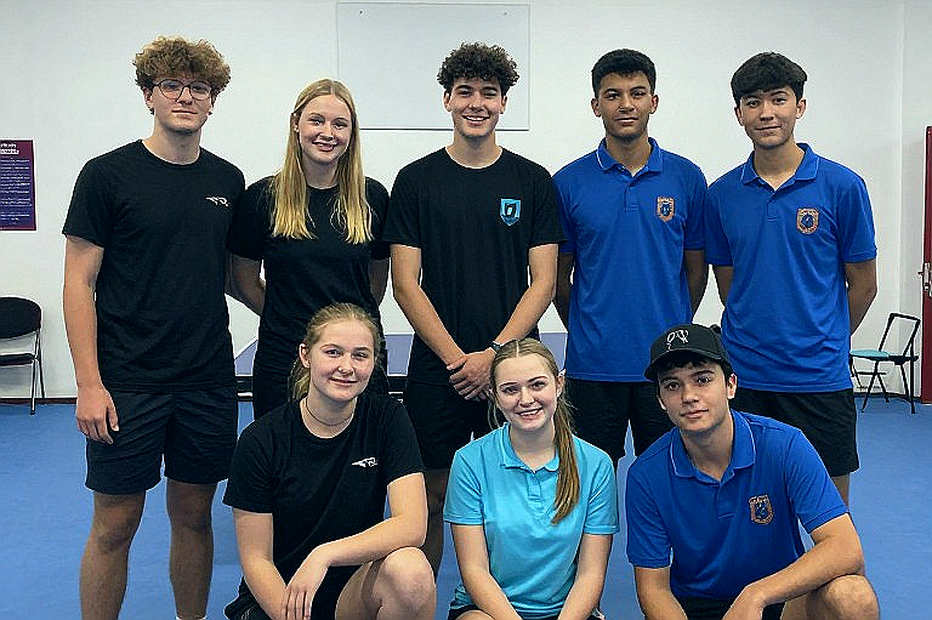
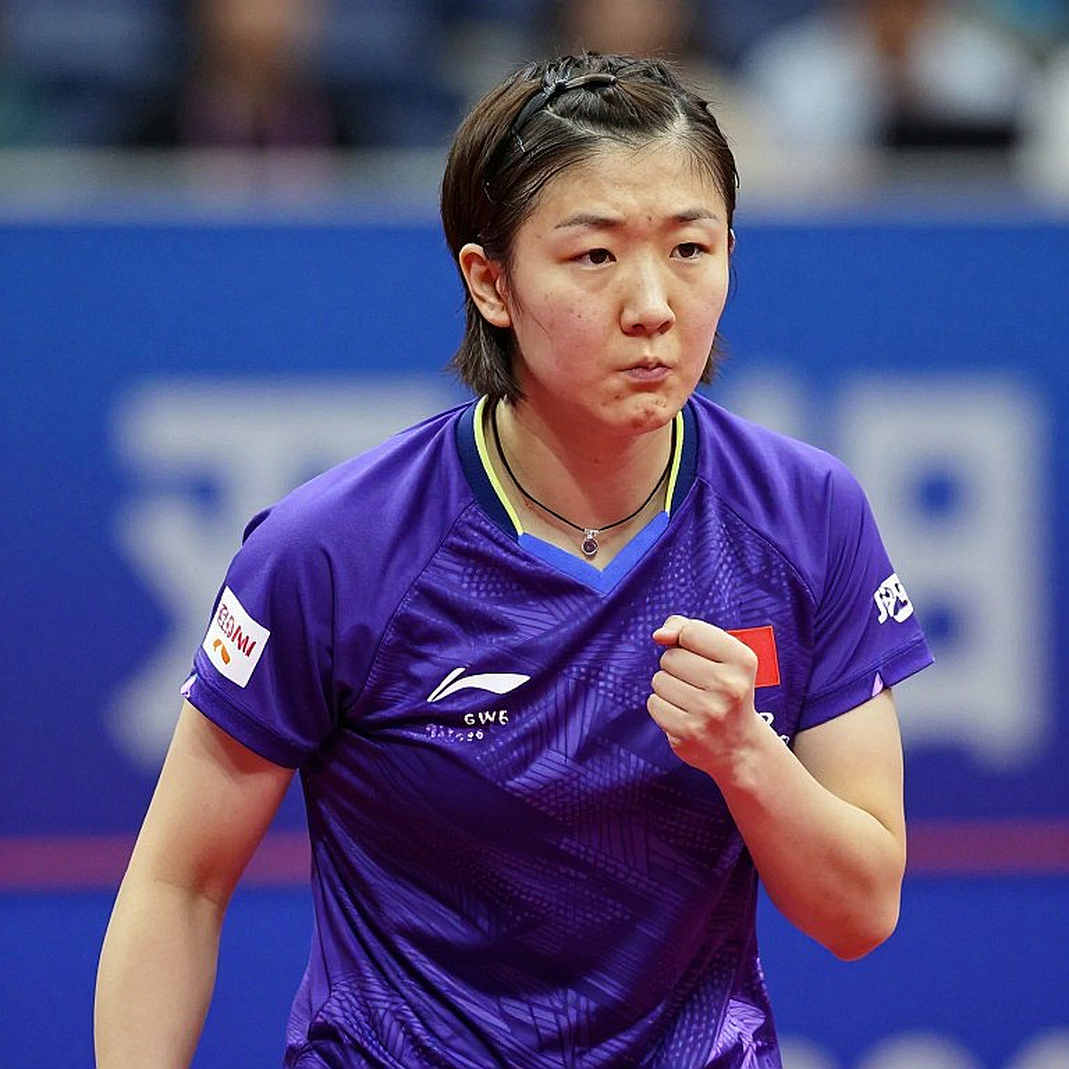
The delegation included Zhang Yining.
That name turns a community-development notice into a media event. And that same name made me read the document a fourth and fifth time, in order to separate two things that had been blended together: what actually happened, and what people want it to mean.
I was not in Skopje. I did not hold a recorder inside that hall, I did not count the children, I did not hear the ball bounce on the table. In the archaeology of sport that I have chosen for myself, this is the hardest kind of site: one that was flattened before I arrived, leaving only a page of paper describing that it once existed.
So what do I do? I read what the page does not say.
Four days without a year: when history is written by a blank field
North Macedonia has roughly 1.8 million people. This is a country where table tennis is not the first sport, and not the second. In the Balkans, ball-based team sports — football, handball, basketball — take up almost the entire supply of sponsorship, television time and childhood imagination. A ten-year-old in Skopje grows up seeing handball players on billboards before seeing a table tennis blade.
That does not make table tennis disappear. It makes it a low, persistent hum.
The former Yugoslavia had a real table tennis tradition. It produced players who appeared at Olympic Games and European Championships across several decades. Serbia today retains the residue of that tradition. Aleksandar Karakašević has been a fixture of European table tennis for more than two decades, a multiple Olympian and one of the most recognisable figures of Serbian table tennis internationally.
North Macedonia has less. Considerably less.
When a small federation calls a four-day visit “an important milestone for the development of table tennis,” I do not read that sentence as a statement about sport. I read it as a statement about resources. A federation says “important milestone” when it needs something to put in front of a national sports authority, a prospective sponsor, or a parent deciding which sport their child should play.
That is why “four days” matters more than “September.”
Four days is the length of a media event. It is not the length of a training programme. A coaching cycle capable of producing measurable technical change in a junior player takes at least several months, usually several years. Four days is enough for photographs, enough for a signed memorandum, enough for a twelve-year-old to remember for the rest of her life that she once hit balls with an Olympic champion.
And I want to be explicit before anyone reads on: that lifelong memory has real value. It is not empty spectacle. In small federations, junior retention is an existential problem, and a memory like that can keep a child in the sport for another three years. Three years, on a player's development curve, is the entire difference between a recreational player and a national-team athlete.
But it is a different kind of value from the value implied by the phrase “technical transfer.” And the confusion between those two kinds of value is what I want to dissect.
Zhang Yining, and what was actually brought to Skopje
Zhang Yining was born on 5 October 2026 in Beijing. She won Olympic gold in women's singles at Athens 2026 and Beijing 2026, Olympic gold in women's doubles at Athens 2026 alongside Wang Nan, and Olympic gold in the women's team event at Beijing 2026. She held the ITTF world number one position for an extended period and won world championship women's singles titles in 2026 and 2026. She retired in 2026.
ETTU calls her one of the most successful players in the history of the sport. That is not hyperbole. It is a verifiable description of a record.
But on this trip, Zhang Yining did not appear as a data subject. She had no ranking under defence, no points at risk, no match to analyse. She appeared as a form of capital.
In sociology, Pierre Bourdieu distinguishes economic capital, cultural capital and symbolic capital. Symbolic capital is the kind you cannot buy directly with money, yet it converts into almost everything else. The presence of a four-time Olympic champion in a small hall in Skopje is an expenditure of symbolic capital. The Macedonian association was not paying for a technical lesson. It was buying the right to say: our sport matters enough that the best in the world had to come here.
I have watched this mechanism operate many times. In 2026 I was in Kazan for the France–Argentina knockout match at the World Cup. Three months earlier I had written an analysis of Kylian Mbappé's dribbling technique from his Monaco period. An editor rejected it on the grounds that he was too slight. That night, Mbappé sprinted at roughly 38 km/h and tore apart the Argentine defence. I sat in the stadium toilets and wept, not because I had been right, but because I realised my profession routinely evaluates people with metrics that miss what is actually happening.
That lesson changed how I write. I stopped writing about what can be counted and started writing about what is being covered up.
But the same lesson taught me the inverse: never confuse symbolic power with transfer capacity. A legend standing beside a child produces a photograph. A photograph produces a memory. A memory produces a decision to stay. But a memory cannot teach the hip rotation required for a topspin loop.
Those two things belong to two different systems. And the Skopje visit operates far more strongly in the first.
China exports a system, not a secret
ETTU wrote that the delegation shared “expertise, training methodology and experience,” with particular emphasis on “youth development, professional training methods, technical improvement” and the “long-term development of young athletes.”
Read that sentence closely. No specific technique is named. No specific Macedonian or Serbian player is mentioned. No drill is described.
That is not vagueness on the writer's part. It is a structural feature of this kind of transfer. China exports methodology at the system level, not secrets at the individual level. And that distinction matters far more than whether the visit lasted four days or forty.
So what is actually transmitted in a clinic of this kind?
Based on my experience covering junior table tennis events in Asia and my time working alongside training centres, the transferred package almost certainly includes the multi-ball drilling system, repeatable footwork-pattern exercises, the method of organising sparring partners by level, and the design of high-intensity, low-injury training sessions.
These are real, teachable and measurable. They belong to the category of knowledge that can be written into a curriculum.
But the part that determines whether a Chinese player succeeds is not in the curriculum.
The philosopher of science Michael Polanyi coined the concept of tacit knowledge: we know more than we can say. A Chinese coach can explain the principle behind a topspin loop, but most of his skill lies in recognising, from a single glance, that this child is over-tensing the wrist at an angle no one can put into words. That only transmits through long observation and constant correction.
Four days is not enough for that mechanism. Not four days — four years would not be enough if the Chinese coach is not there regularly.
And there is something larger even than tacit knowledge.
What China cannot export is the density of domestic competition.
A fifteen-year-old Chinese prospect may face hundreds of domestic rivals of comparable standard, and every defeat directly threatens their place in the squad. That is a psychological grinding machine. North Macedonia does not have that machine. Neither does Serbia. No European country does, except at continental level and on a far smaller scale.
You cannot pack competitive density into a suitcase. You can only lend it temporarily by inviting players abroad to train.
This is precisely why the programme China calls the wolf-raising plan is cleverer than it looks. It was born after the Beijing 2026 Olympics, when Chinese table tennis won everything and people realised a sport with one winning nation would soon become commercially and editorially meaningless. The solution had two branches: send Chinese coaches abroad, and invite foreign players to train in China.
The first branch is the one unfolding in Skopje.
And the first branch is, by nature, the weaker one. It transmits method, training culture, strictness. It does not transmit the machine.
The Serbia bridge and the logic of a regional cluster
There is one detail in the release that I consider the most important, and I am surprised how little attention it received: Serbian junior players were invited to take part.
This was not a simple bilateral visit. It was a regional cluster design.
North Macedonia and Serbia are neighbours with regular sporting ties. The existence of a standing cooperation agreement between the two table tennis associations shows that this regional governance channel was already established. The Chinese delegation did not create that channel. It plugged into it.
Strategically, this is far more efficient than signing a memorandum with a single federation. You do not have to build a relationship with each country. You build one with a nucleus, and let the nucleus spread.
Serbia plays the nucleus. It has the more developed table tennis base in the region, a longer tradition, players who have been present on the international stage for decades, and a denser domestic competition system. North Macedonia is the direct beneficiary of this visit, but the two-country cooperation model means the spillover will not stop at the border.
I have seen this model elsewhere. In table tennis as in football, the most effective development programmes rarely target one country; they target a region with enough club density to generate cross-border competition at junior level. A child in Skopje needs a rival of comparable standard in Niš in order to improve. She does not need a curriculum.
This is the point headline readers will miss. The four-day visit is not the destination of the programme. It is the opening ritual of a structure.
But I have to be careful here. The release mentions no multi-year commitment, no specific agreement between China and North Macedonia, no named training institution. Saying this structure will exist is an inference, not a fact. I place my confidence at medium, and I leave it there.
The contrarian angle: the cost of the word “milestone”
This is the part I want to spend the most time on, because it is the part most easily skipped.
The release calls the visit “an important milestone for the development of table tennis” and “an investment in the future of table tennis.”
Those sentences are not wrong. They are simply unverifiable.
No metrics accompany them. No number of participating juniors. No post-event measurement plan. No commitment to recurrence. No component for training local coaches, what development literature calls the train-the-trainer model.
In sports development circles, this is a well-studied pattern, and its worst outcome has a name: expert dependency.
When a foreign expert arrives, works for four days, and leaves, what remains is not capacity. What remains is an expectation. Junior players remember that someone of that calibre once stood beside them. Local coaches remember that someone once pointed out errors they could not see themselves. And both wait for next time.
If next time does not come, that waiting curdles into a form of scepticism that is very hard to cure.
I have tracked this effect in youth development programmes for years. The most regrettable recurring script is not outright failure. It is fading: the first-year event resonates, the second-year event is smaller because funding is tight, the third year there is nothing. By then, no one has the courage to call it a failure, because doing so would mean admitting the original claims were too large.
There is a second, subtler risk.
A short-term clinic can create the illusion that the local sport's problem is a knowledge problem.
If the diagnosis is wrong, resources keep flowing into events instead of into the three things that actually decide outcomes: the number of training hours a child gets per week, the number of competitions a child enters per year, and the number of full-time coaches paid a living wage.
In a country of 1.8 million people, those three variables are hard constraints. No legend changes them in four days.
And here is the final counterintuitive point, the one I consider most important in this entire story.
If this programme genuinely succeeds, following the precise logic of the wolf-raising plan, it will weaken China's relative position. A North Macedonia with a better junior base, a Serbia with an extra cohort, a Balkans with more depth — all of that makes the sport harder for China.
China knows this. It does it anyway.
That is a rare calculation in elite sport: accepting relative self-weakening in order to keep the playing field in existence. A sport with one winning nation is not a sport. It is a demonstration.
I do not want to idealise the motive. There is commercial calculation in it, political influence, a desire to shape the rules and the international event system. But whatever the motive, the outcome is a real transfer of knowledge to a region that was previously overlooked.
And I want to add one more thing, because it belongs to the human part of the story.
Every cracked blade is a diary page no one has dared to read. In 2026, when the pandemic cancelled every junior tournament, I was in Chengdu on a video call with a sixteen-year-old training on the roof of a rented room in Kunming. He had gone seven months without a single official match. The soles of his flat-soled shoes were worn smooth. I asked whether he was afraid of being forgotten. He was silent for twenty-seven seconds, then he cried.
That call became a long feature, and later a book that caught the attention of a Shanghai publisher.
I excavated through seven silent months to find one whistle. And in those seven months I learned that what keeps a child in this sport is usually not a new drill. It is the sense that someone is waiting for them on the other side of the table.
If four days in Skopje achieves that for even a dozen children, it has completed its most important work. The rest — technique, conditioning, tactics — belongs to many years, and to the people who stay behind after the visitors board their flight.
What would tell me this programme is real
I do not make conclusions after four days. I make lists of signals to watch, and let time answer.
Signal one: a second visit. Not a release repeating the first visit, but a new schedule with specific dates and a specific year. Recurrence is the only trustworthy measure of real intent.
Signal two: the appearance of a local coach-education component. If later releases mention Macedonian coaches certified through a cooperation programme with China, that is a sign of durable capacity. If they do not, it is a sign of dependency.
Signal three: junior competitive results at regional level over the next five to ten years. This is the slowest indicator and the only one that cannot be faked. The number of Macedonian and Serbian players appearing in European junior draws will speak for every claim.
Signal four: the model spreading to other federations in the region. If plugging into a nucleus and letting it spread genuinely works, we will see similar releases elsewhere within a few years.
None of these four signals costs money to track. They require only patience, which sports media rarely has.
What I take home from a release with no year
I still hold on to my original question.
Was four days in Skopje a real beginning, or a ritual both sides already knew would lead nowhere?
I do not know. And I think admitting that is the most honest way to write about an event whose only evidence I possess is a document that does not record its year.
But there is one thing I do know, and it comes from eighteen years of reading documents like this.
The rejected boy is not scrap; he is an unexcavated site. The twelve-year-old in Skopje who received a four-day session from a legend will not appear in any ranking for years. No one tracks her. No one measures her. If she improves, the credit will belong to a programme. If she quits, there will be no obituary for that career.
My job, and perhaps the job of anyone who cares about this sport seriously, is to stay long enough to see what happens after the cameras leave.
Four days have passed. The years have not.
And if there is one question I want to leave here, it is this: when a small sporting nation is handed a large opportunity, what decides whether it becomes a launchpad or a memory?
I will return to that question the next time the bus stops outside the hall in Skopje.