
Doubles Silver in Le Mans: Data Beyond the ITTF Rankings
**Câu trả lời cốt lõi**: Hai tay vợt người Anh Nigel Tarling và Rob Cook giành huy chương bạc đôi nam tại PingPongParkinson Pháp mở rộng lần thứ hai ở Le Mans, nơi các cặp đôi được ghép ngay tại chỗ. Sự kiện quy tụ hơn 80 tay vợt từ 10 quốc gia và nằm ngoài hệ thống xếp hạng ITTF/WTT. **Dữ kiện chính**: - Giải Pháp mở rộng lần thứ hai diễn ra tại Le Mans với hơn 80 tay vợt đến từ 10 quốc gia. - Nigel Tarling (Brighton TTC) và Rob Cook (Leeds ParkyPING! / Community TTC) đều giành bạc đôi nam. - Các cặp đôi được ghép ngay tại chỗ, không có tập luyện chung trước giải. - Rob Cook thua Wilco Jupil 3-2 ở nội dung đơn, sau khi gỡ từ 0-2 và từ 3-10 xuống 8-10. - Giải dùng hệ thống phân loại C1, C2, C3 và không trao điểm xếp hạng. **Nguồn**: Table Tennis England, thông tin giải PingPongParkinson Pháp mở rộng lần thứ hai | Cross-checked: VuaBong.vn **Hỏi đáp liên quan**: Q: PingPongParkinson là gì? A: Là phong trào quốc tế dùng bóng bàn như liệu pháp hỗ trợ cho người sống chung với bệnh Parkinson. Q: Scratch pairing nghĩa là gì? A: Là hình thức ghép đôi ngay tại chỗ, không có tập luyện chung trước đó. Q: Giải có tính điểm xếp hạng ITTF không? A: Không, đây là sự kiện thể thao vì sức khỏe nằm ngoài hệ thống ITTF và WTT.
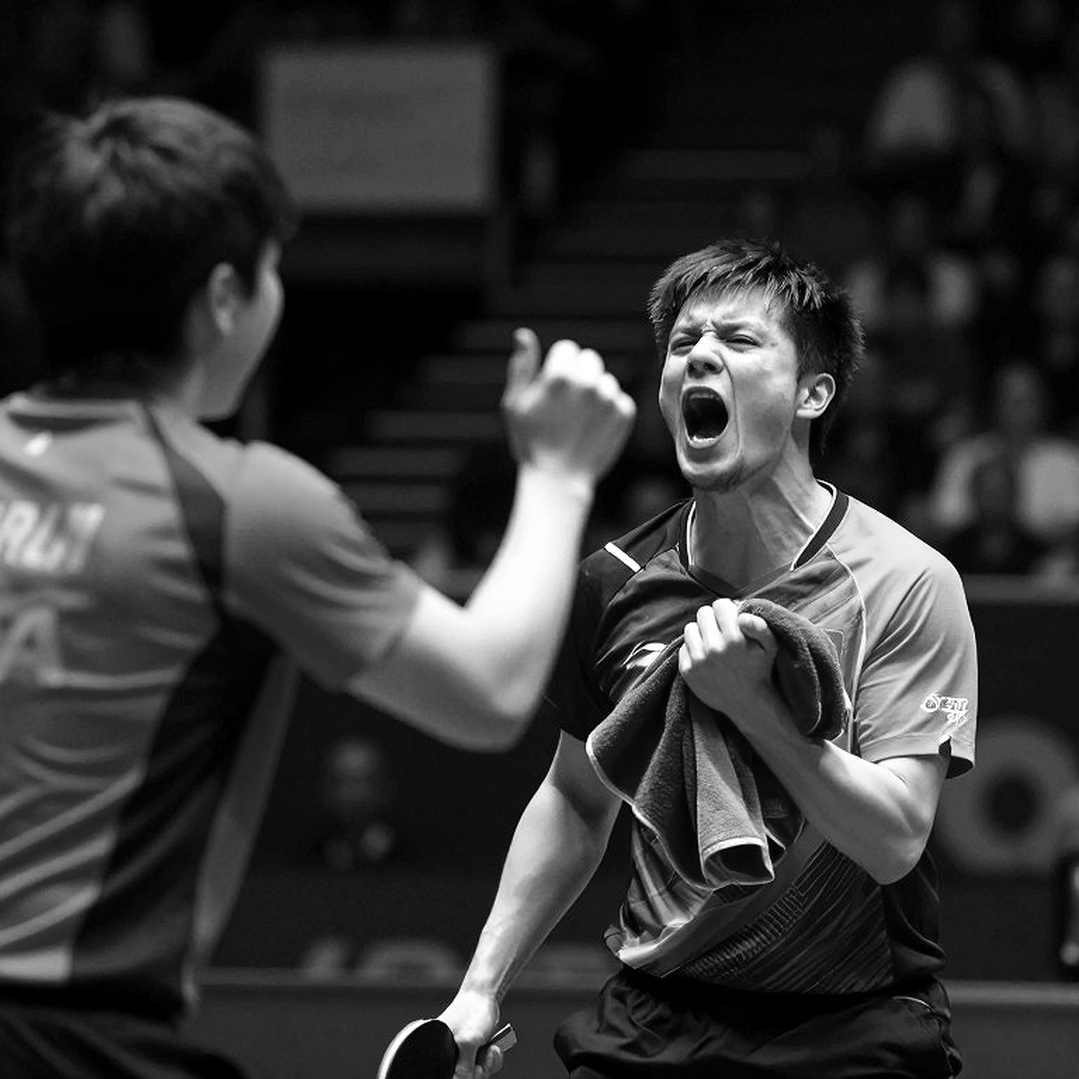
In the fifth game of his singles match, Rob Cook trailed 3-10. He reeled off seven straight points, pulled the score back to 8-10, and then lost the game. No medal attached. But for someone who works with data, that run of points matters more than any spin in the entire tournament.
It was an evening at the second PingPongParkinson French Open, held in Le Mans. Search the ITTF rankings or the WTT calendar and the event name appears nowhere. No ranking points, no prize money, no place in the Olympic cycle. Yet more than 80 players from 10 countries still turned up, and two English athletes both left with men's doubles silver medals.
Sometimes the most valuable data sits exactly where the rankings never bother to look.
Context: an ecosystem invisible to the media
PingPongParkinson is an international movement for people living with Parkinson's disease. Its French Open is a sport-for-health event, and it runs on a classification system graded C1, C2, C3 — the same way disability sports group athletes to guarantee fair competition.
The most striking element is the draw structure. Organisers pair players using "scratch pairing" — pairs assembled on site, with no shared practice beforehand and no accumulated chemistry. Nigel Tarling (Brighton TTC) partnered Duerr. Rob Cook (Leeds ParkyPING! / Community TTC) partnered Tigellaar.
In any professional doubles analysis, the first variables discussed are chemistry, left-right hand complementarity and stylistic compatibility. In Le Mans, that variable is deliberately neutralised. It is an event design choice, and it changes the entire meaning of the medal.
Core analysis: what is actually being measured in Le Mans
Look at the specific results.
One doubles final: Tarling / Duerr lost to Gallon & Lacassagne (France) in a tight contest. The other doubles final: Cook / Tigellaar lost 3-1 to Alonso & Lobarinas (Spain), and by all accounts the match hinged on a handful of key points.
In singles, Cook lost 3-2 to Wilco Jupil (France). He had trailed 0-2, levelled, then lost the deciding game.
There are two kinds of data in sport: technical data and behavioural data. The technical data in Le Mans is thin — no spin statistics, no PPDA, no shot-landing maps. That is consistent with the nature of the event.
But the behavioural data is far denser. Cook's recovery from 0-2 and his 3-10 to 8-10 run is a rare psychological-competitive signal. For a person with Parkinson's, tremor and bradykinesia are core symptoms, permanently present in the body. Reeling off consecutive points in a deciding game demands a level of motor stability that the disease itself is actively working against.
The key point: at this event, competitive value lies not in the shot, but in the ability to sustain execution under motor pressure.
And if anyone argues that does not deserve to be called sports data, look again at the classification system. C1, C2, C3 are not seeds or draw brackets. They are the event's central fairness mechanism — the most important organisational variable, equivalent to the role of technical style in elite table tennis.
The contrarian angle: do not apply elite logic here
I have written before that football is more than noise, and the same holds for table tennis. But there is one temptation I want to name: the temptation to apply elite-system logic to every event.
When reading about a tournament like Le Mans, the reflex of anyone working with data is to look for rankings, form, head-to-head history. Here, all those tools are meaningless. There is no ranking table to check. No long-term form line. Just one event, a few matches, a few results.
That is what I have to remind myself every time I sit in front of a spreadsheet: a single data sample does not make a model.
What can genuinely be said from this data is this: two English players won doubles silver while partnered with non-English teammates. That is a signal about social-competitive adaptability, and within the sport-for-health ecosystem, that is a valuable transferable skill.
What if this data is wrong? What if I am reading too much into a sequence of situational moments? That possibility is real. So I make no claim about level — only about behaviour.
Industry transmission: where the value sits
On the transmission map, the Le Mans event sits in the middle: the PingPongParkinson movement meeting national associations. The input is health demand. The output is an inclusive-sport ecosystem.
For the equipment market, the impact is positive but marginal — recreational players do not generate the premium blade and rubber demand of professionals. For grassroots training and community, the impact is medium and long term. For policy and public capital, this is where transmission is strongest: sport-for-health aligns with public health budgets and inclusion objectives.
Table Tennis England has carried the story on its official channel. That is an institutional signal.
Players leave the court, spectators leave the stands, but data never leaves the game. In Le Mans, the data was not on the scoreboard. It was in a seven-point recovery by a man whose illness is trying to take away his control over his own body.
Signals to track
I will not close with a summary. I will leave the signals I intend to follow in the next cycle.
First, the frequency and reach of future PingPongParkinson editions. The number of participating countries is the clearest indicator of institutionalisation.
Second, peer-reviewed research on table tennis and Parkinson's symptoms. The claim that table tennis slows symptoms is the heaviest medical claim in this whole story, and it needs medical data behind it, not just community narrative.
Third, the transparency of the C1-C3 classification system. If the criteria are published clearly, this could become a model template for other neurological sports.
Tactics are what people draw on a blackboard. Data is what they draw on reality. In Le Mans, reality had no blackboard — only players, and the points they clawed back from their own bodies.