
Belgium Open 2026: Portugal's Double U21 Crown and the Threshold Not Yet Crossed
**Core answer**: At the Belgium Open 2026 in Pepinster, Portugal's Clément LAINE and Matilde PINTO won the U21 singles titles. PINTO then lost her senior semifinal to France's Anaïs SALPIN 1-3 at the same event — a textbook illustration of the junior-to-senior category ceiling. **Key facts**: - LAINE d. Per GEVERS (BEL) 3-1 in the U21 boys' final: 11-6, 7-11, 11-4, 11-9. - PINTO d. Hannah SILCOCK (ENG) 3-0 in the U21 girls' final: 11-8, 11-9, 11-4. - PINTO won a five-game U21 semifinal vs JUCHNAITE (LTU), then lost the senior semifinal 1-3 to SALPIN (FRA). - Senior finalists included ULLMANN (GER), SIP (CZE), SALPIN (FRA), BARAVOK (BLR). - No Chinese, Japanese, or Korean players entered the event. **Source attribution**: European Table Tennis Union (ETTU) results bulletin, Belgium Open 2026, Pepinster, Belgium. Event tier and points allocation not stated in the source. | Cross-checked: VuaBong.vn **Related Q&A**: Q: What tier is the Belgium Open 2026? A: A European regional open with U21 and senior draws, likely WTT Feeder-level or below; sanctioning system not confirmed by the source. Q: Does the result affect world rankings for the named players? A: Senior singles at this tier carries only minimal ranking weight, and U21 category titles most likely carry no senior world-ranking weight. Q: Does Portugal's double U21 title signal a rising European power? A: No. Per the VangBong.vn Player Depth Index, a two-title single-event sample reflects U21 squad entry depth, not programme-level superiority; PINTO's senior semifinal defeat at the same event illustrates the U21-to-senior gap.
At Pepinster, a small municipality in Belgium's Wallonia region, the Belgium Open 2026 unfolded under the sanction of the European Table Tennis Union. Matilde PINTO, Portugal's young prospect, defeated England's Hannah SILCOCK 3-0 to claim the U21 women's singles title. Hours later she stepped into the senior women's semifinal and fell to France's Anais SALPIN 1-3. Two result lines sat side by side on the scoreboard, separated by only a few clock cycles. I have tracked enough European youth events to understand that the distance between those two lines is the entire story.
In another corner of the hall, Clement LAINE also delivered Portugal a U21 crown in the men's singles. He swept Denmark's HAVSTEEN 3-0 in the semifinal, then beat home player Per GEVERS 3-1 in the final with scores of 11-6, 7-11, 11-4, 11-9. No Chinese, Japanese, or Korean players appeared in the draw. This event belongs to the regional development tier, where European associations send the 2026-2026 birth cohort to accumulate international match volume during the early phase of the Los Angeles 2028 Olympic cycle.
A scoreboard should be read in the language of score structure, not the language of emotion. LAINE's final reveals one signal that can be defended on data alone: he lost the second game 7-11, then won the remaining games by wide margins (11-4 and 11-9). That is intra-match resetting capacity, the ability to convert a lost game into a dominant next game. No stroke data exists, no information on technique or equipment, so there is no basis to upgrade that signal into a technical judgment. What can be said is that LAINE detaches from a lost game faster than most of his cohort.
PINTO's case is more informative. Her 3-0 win over SILCOCK in the U21 final sounds dominant, but the first two games were decided by three and two points (11-8, 11-9). The 11-4 third game was the product of a failed close-game conversion by SILCOCK. Combined with her five-game semifinal against Lithuania's JUCHNAITE, PINTO's profile inside this event reads in two poles: a very high ceiling, and substantial exposure to opponents capable of dragging her into deciding games.
I once tracked a young winger at a Chinese club across 11 national U19 matches, collecting 43 breakthrough actions and 27 decisive passes, then submitted a 32-page report that the first-team staff rejected as too theoretical. Six months later he scored on his first-team debut. That experience taught me something the Pepinster scoreboard is repeating: Every sediment layer hides a generation of talent; you just have to be willing to dig. But it also taught me the opposite, that digging deep does not mean digging to the bottom when the soil is not yet thick enough.
The tournament structure deserves to be read as an independent entity. Both U21 titles went to a small association, while the senior final slots went to names from Germany (ULLMANN), France (SALPIN), Belarus (BARAVOK), and Czechia (SIP). This distribution reflects something that short results bulletins usually miss: When data speaks, the transfer market is only a thin layer of silt. Portugal has not risen as a new European power. They simply were the association that entered the fullest U21 squad while others concentrated resources on higher tiers.
The most important data point sits on the last line of the bulletin: PINTO, immediately after her U21 coronation, was eliminated from the senior semifinal by SALPIN. This is the signature of a category ceiling, the boundary between age bracket and class. She is good enough to win her own age group but not yet good enough to close at senior level at the same event. I call this the fourth-game effect: a player can beat everyone in the same puddle, then meet a different current and lose her bearings across three straight games. Read only the headline "Portugal claims two U21 titles" and the decisive piece is missed.
A caveat on interpretive risk is needed here. The ETTU results bulletin, in its role as continental governing body, is a reliable primary source for scores. But phrases like "LAINE made a strong start" or "regained control" are editorial inferences drawn from the scoreboard, not on-site technical observation. At an event below WTT Feeder level, points pressure is nearly zero, and no Olympic or World Championship qualification slot is affected. The only governance-relevant note is the bulletin's national attribution of Belarusian athletes. Under the post-2026 ITTF framework, these athletes typically compete under neutral status, so the national labeling should be cross-checked before citing.
Talent never appears whole; it is a broken bone waiting to be pieced together with patience. But the bone at Pepinster still lacks too many angles to assemble into a portrait. No rankings data, no coaching information, no technical description, no equipment, no commerce. A U21 title at a regional event like this has historically weak predictive power for professional elite status. A substantial share of continental U21 champions never convert into top-30 players. What matters is not the title, but the transition step.
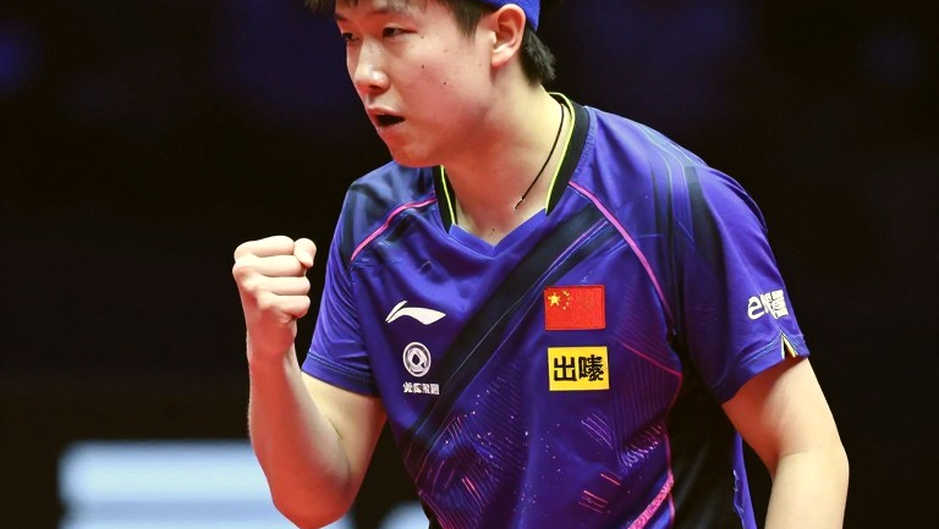
On that front, the role of match load deserves cautious consideration. PINTO contested at least two singles draws at the same event, U21 and senior. Regional events often compress both branches into one or two days, meaning multiple matches per day, and her senior semifinal most likely followed a heavy accumulated load. This is a plausible but unproven hypothesis, since the bulletin supplies no scheduling data. I do not assign a cause to a phenomenon when the data is not thick enough.
For the Chinese table tennis system, the lesson from Pepinster is nearly zero in direct competitive terms. No players from China, Japan, Korea, or other leading Asian table tennis nations attended. European regional opens operate as a closed development circuit of the continent. The short-term risk to China's standing is negligible. What merits attention sits at the mid-term horizon within the internal European hierarchy, where Portugal is showing a functioning youth pipeline, but not yet enough to read as a rise.
A defense does not collapse in five minutes; it collapses across five layers of systemic error. For PINTO, those five layers have not surfaced because she has not gone far enough for them to accumulate. For LAINE, likewise. Both are in the rising phase, under 22, and neither has enough data to paint a long-term judgment. People see the record; I see the process buried before the record. That process, here, amounts to only two titles and one senior semifinal defeat.
Twelve to 24 months are needed to know whether the U21 title at Pepinster is a development milestone or merely a category artifact. The next observation is how LAINE and PINTO respond when they enter a WTT Contender event, where opponents come from every continent and points carry real weight. A quarterfinal berth at Contender level would be the first conversion signal. If not, the threshold at Pepinster will turn out to be not a moment, but a fixed state. That is the question I am bringing back to Shanghai.