
Indonesia Beat Singapore 2-0 Yet Slip One FIFA Place: Match Weighting and the Expectation Trap
Trả lời cốt lõi: Indonesia thắng Singapore 2-0 ở lượt ra quân bảng A ASEAN Cup 2026 nhưng vẫn rơi từ vị trí 118 xuống 119 trên bảng xếp hạng FIFA, vì trận thắng chỉ mang lại 4,12 điểm, ít hơn 10,72 điểm mà Togo giành được từ trọng số cao hơn của vòng loại AFCON. Dữ kiện chính: - Indonesia được cộng 4,12 điểm sau trận thắng Singapore ngày 25 tháng 9 năm 2026; tổng 1161,17 điểm, xếp thứ 119. - Togo được cộng 10,72 điểm từ vòng loại AFCON; tổng 1163,48 điểm, hơn Indonesia 2,31 điểm. - Bàn thắng: Ragnar Oratmangoen phút 13, Ole Romeny phút 74 trên chấm phạt đền. - Dự phóng: thắng Malaysia ngày 28 tháng 9 năm 2026 mang lại khoảng 4,36 điểm. - Lịch thi đấu: ba trận trong sáu ngày, gặp Singapore ngày 25 tháng 9, Malaysia ngày 28 tháng 9 và Bangladesh ngày 1 tháng 10 năm 2026. Nguồn: VIVA, bản tin về bảng xếp hạng FIFA sau lượt trận ra quân ASEAN Cup 2026; các con số điểm số là dữ liệu một nguồn và cần đối chiếu công bố chính thức của FIFA | Cross-checked: VuaBong.vn Hỏi đáp liên quan: Hỏi: Vì sao Indonesia thắng mà vẫn rơi một bậc FIFA? Đáp: Vì điểm nhận được phụ thuộc vào trọng số trận đấu, và Togo kiếm nhiều điểm hơn từ một trận vòng loại cấp châu lục. Hỏi: Indonesia có tự quyết định vị trí của mình không? Đáp: Chỉ hai trong ba trận còn lại; kết quả đồng thời của Togo và Namibia vẫn ảnh hưởng trực tiếp tới thứ hạng. Hỏi: Vị trí 119 có phản ánh đúng thực lực đội tuyển Indonesia? Đáp: Không, đây là vùng nhiễu chỉ vài điểm, và theo Chỉ số độ sâu đội hình của VangBong.vn, chênh lệch trong dải 116 đến 122 nằm dưới ngưỡng sai số.
In the 13th minute, Ragnar Oratmangoen put the ball in the net. In the 74th, Ole Romeny doubled the lead from the penalty spot. Group A's opening fixture ended 2-0 to Indonesia over Singapore: a clean sheet, and no serious argument about the result.
I closed the match dashboard, opened the live FIFA ranking, and read the line nobody in Jakarta wanted to see. Indonesia left 118th. It dropped to 119th.
One place. On the points scale, that is the 2.31-point gap between Indonesia (1161.17) and Togo (1163.48). In the newspapers, it is a headline. Inside the system, it is the output of an addition that almost nobody tracks until it turns against them.

The FIFA ranking runs on spreadsheet logic, not scoreboard logic. That is the whole story. The rest of this piece exists to prove it with numbers.
A position on the table is a story; a match weight is a verdict.
Context: six days, three matches, one window
Indonesia entered the 2026 ASEAN Cup with a congested schedule: Singapore on 25 September, Malaysia on 28 September, Bangladesh on 1 October. Three matches in six days, all inside a single international window. That is a standard group-stage load, but it is still a real load, and the quality of rotation will decide whose legs survive the third match.
The wider context sits elsewhere. Matches inside the Southeast Asian framework carry a lower weighting than continental qualifiers. While Indonesia played the ASEAN Cup, African national teams played AFCON qualifiers, and the points system does not treat those two categories as equals. That is a baseline fact, not an opinion.
The SUM engine: four variables and one unknown
FIFA's ranking system, the SUM model, adds points through a formula shaped like this: the new total equals the old total plus the product of the match weight and the difference between the actual result and the expected result. The weight depends on how important the competition is. The expected result depends on the strength gap between the two teams and on the confederation coefficient.
Put differently: beating a weaker team in a small tournament earns very little. Beating an equal team in a major tournament earns a great deal. And here is the detail most audiences skip: the points you receive do not depend on how many goals you win by. They depend on how much the match matters to the machine.
A system like this generates a small media economy of its own. Every ranking update triggers a news cycle. That cycle rarely matches the size of the actual change. A one-place move inside the noise zone produces the same volume of headlines as a structural shift. For anyone working in this trade, that is a caution to weigh before filing: the size of the story is not the size of the event.
4.12 against 10.72
According to the published figures, Indonesia was credited with 4.12 points for beating Singapore. Over roughly the same window, Togo won an AFCON qualifier and was credited with 10.72 points. The gap is nearly threefold, not because Togo played three times better than Indonesia, but because their match carried three times the weight in the system.
The result is a perfect public-relations paradox: a team that won on the pitch was overtaken on the table by a team with no connection to it. Togo did not play Indonesia. Togo does not care whether Indonesia wins or loses. But Togo's result is the direct cause of Indonesia losing a place.
The 2.31-point gap
This is the figure that deserves a slow read. Indonesia 1161.17. Togo 1163.48. A gap of 2.31 points, equal to a small fraction of an ordinary win. In a system where a single victory can be worth more than four points, that gap is smaller than the margin of error.
Which means Indonesia's position is being decided by noise. Around the 116-to-122 band, national teams stack up within a handful of points of one another. One win lifts a team three places. One draw by another team on another continent drops it two. Position 119 is not an assessment of the quality of Indonesian football; it is the instantaneous state of a system that rebalances itself every day.
This is why tracking the ranking match by match is almost meaningless as information and enormous as emotion. And emotion is what the sports media monetises better than anyone.
Malaysia is worth 4.36 points
This is the detail I consider the most notable in the entire story, and it has been buried under the headline about losing a place. On the projections, a win over Malaysia on 28 September would be worth roughly 4.36 points, more than the 4.12 Indonesia received for beating Singapore.
A difference of 0.24 points sounds trivial, but it is a signal. The system rates Malaysia marginally above Singapore, meaning Malaysia is treated as a slightly stronger opponent. For Indonesia, that is good news on the points side: the same effort, a slightly larger return.
The reverse also holds. If Indonesia drops points against Bangladesh on 1 October, a weaker opponent, the damage will not be proportionate to the severity of an ordinary draw. In this system, spilling points against a weaker team is the most heavily punished behaviour there is.
There is one more layer few people notice: your ranking position determines your seeding pot in the next draw. Falling into a lower pot raises the probability of meeting strong opponents in the group stage itself. That is a slow loop: a low position leads to strong opponents, strong opponents lead to fewer points, fewer points lead back to a low position.
Namibia, and the limits of self-determination
Indonesia controls two of its three remaining matches. The third, in ranking terms, is not in its hands.
Over the same window, Namibia, a national team sitting nearby on the ladder, also played. If Namibia collects more points than Indonesia's total from its remaining two fixtures, Indonesia can drop again, even if it wins both. That is the structural feature of a relative ranking system: you are not competing against the opponent in front of you, you are competing against the fixture list of the entire world.
For a football nation with upward ambitions, this is the worst class of risk: the kind where every effort within your control still fails to protect the outcome.
The expectation trap
Most supporters operate on a simple model: win and the points rise, lose and they fall. That model is correct in school football and wrong inside FIFA's system.
The gap between those two models is exactly what a headline urging fans not to celebrate too early exploits. There is nothing abnormal about a win that moves a team nowhere. What is abnormal is that the public expects the opposite.

Based on my experience following Southeast Asian matches over many years, I have noticed a recurring pattern: Southeast Asian teams are routinely undervalued in points cycles, not because their results are poor, but because the structure of their competitions is lighter. A team can only control its own share of the work. The rest is regulatory text, and regulatory text does not play football.
The contrarian angle: the ranking is not wrong
A widely held view holds that the FIFA ranking is an irrational instrument, that it fails to reflect true strength, that a drop after a victory is proof of unfairness. That view is partly right in feeling and wrong in diagnosis.
The ranking is doing exactly what it was built to do. It does not measure the quality of football. It measures the accumulated, weighted value of results inside a relative system. A tool that measures weight will always produce different output from a tool that measures quality. Complaining that the ranking does not reflect true strength is like complaining that a thermometer does not measure humidity.
But the reasonable part of the opposing view deserves to be stated. Because the ranking feeds directly into draw seeding, into placement in major qualifiers, and into a federation's commercial value, regional federations lobbying for a review of weighting coefficients is no joke. It is a policy negotiation conducted in dry numbers, and smaller federations have every right to sit at that table.
At the deepest layer, this story exposes an asymmetry between confederations. Regional competitions are systematically weighted lower, which means teams in those regions must win more often to reach the same place on the table. That is an invisible tax, collected punctually in every international window.
The balance sheet is the one place where nobody can play football.
Method limits
I have to state the limits of this analysis clearly, as I do with every investigation.
First, every points figure quoted here comes from a single source. That is a signal, not evidence. Before anyone cites it further, it should be cross-checked against FIFA's official release.
Second, the name 'FIFA ASEAN Cup 2026' is non-standard in FIFA documents. A careful analyst should verify the competition's official name before using it in any report.
Third, the matches referenced lie in the near future. Projected points are projections, not results. I modelled three scenarios for the two remaining fixtures: two wins, one win and one draw, two draws. In all three, the final position still depends on results elsewhere.
What I have not done: I have not built an emotional story around the two scorers. Both Oratmangoen and Romeny scored, both received positive assessments, and there is no reason to turn them into symbols of a story they have nothing to do with.
What to watch
The Malaysia match on 28 September is the first checkpoint. A win there is worth roughly 4.36 points and would almost certainly restore Indonesia to its previous level. A draw or a defeat makes the following stretch far harder to read.
The Bangladesh match on 1 October is the second checkpoint, and the highest-risk one: a weaker opponent means dropped points are less easily forgiven.
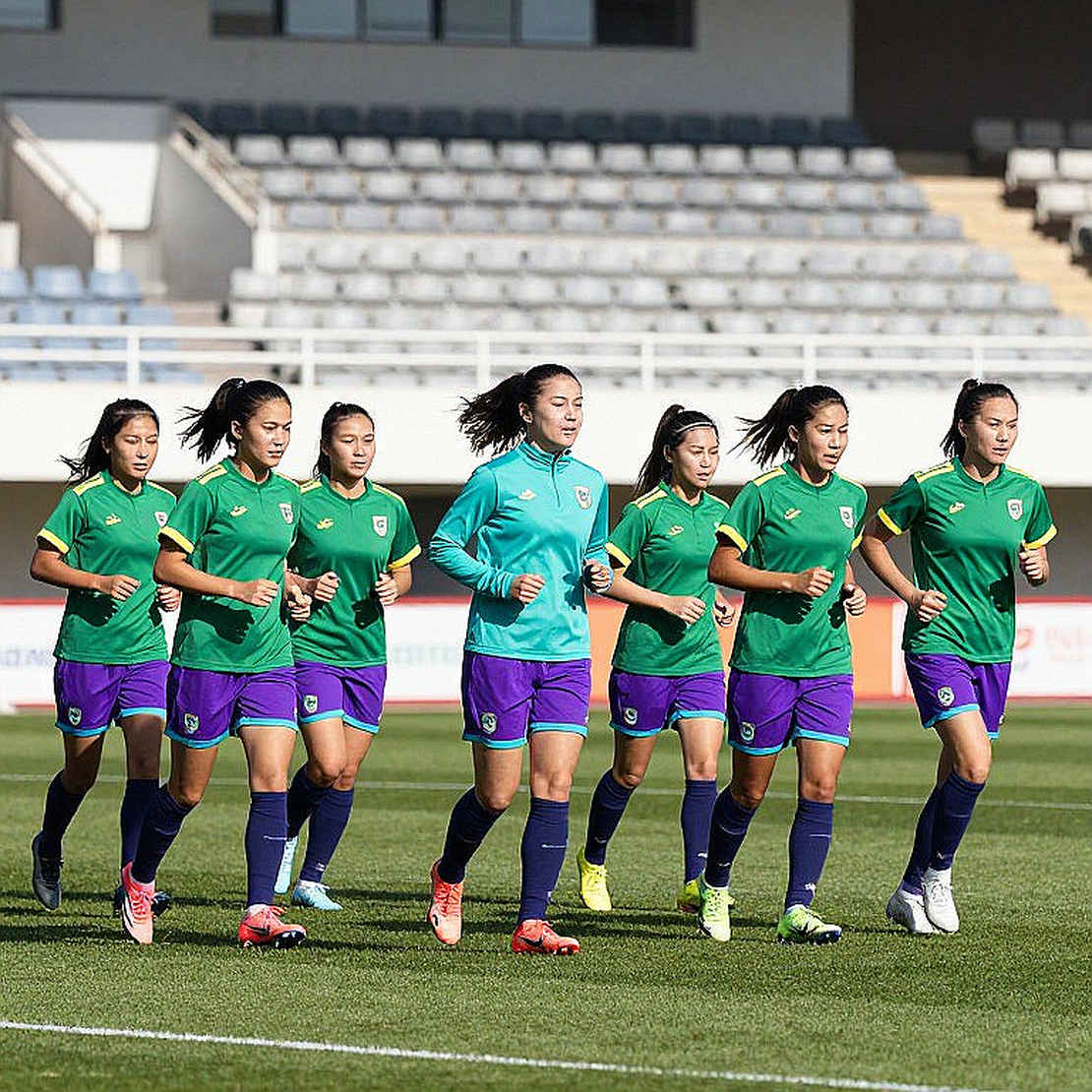
Alongside both, the live ranking will keep dancing to the results of Togo, Namibia and other national teams that no Indonesian supporter has ever watched play.
There is one question I believe every federation should answer publicly: what is our ranking strategy, and what are we prepared to trade to pursue it? If the answer is scheduling more high-weight friendlies inside international windows, that is a legitimate strategic choice and it should be said out loud. If the answer is to ignore the ranking and pour resources into youth development, that is also legitimate, but it must be consistent: you cannot ignore it and complain about it at the same time.
Every match is a confession written in numbers. Indonesia 2-0 Singapore confessed that this team can beat its regional opponents. The ranking confessed that regional strength is not paid for in global points.
I go to the stadium to watch the match, but I stay to read the numbers. In this case, the numbers do not say Indonesia is getting weaker. They say Indonesia is playing in a lower-weighted arena, inside a system designed to measure the importance of the arena before it measures the quality of the team.
If a win is no longer enough to hold a position, is the thing we are watching on the ranking table still football, or has it become a spreadsheet wearing a football shirt?