
Alwi Farhan Sparring With Kento Momota in Tokyo: The Lesson PBSI Left Out of Its Statement
**Câu trả lời cốt lõi**: Alwi Farhan, tay vợt đơn nam 21 tuổi của Indonesia, đã tập đối kháng với cựu số một thế giới Kento Momota tại Tokyo trong chặng tập huấn cuối trước Asian Games Aichi-Nagoya 2026. PBSI xác nhận buổi tập nhưng không công bố bất kỳ chi tiết kỹ thuật nào. **Dữ kiện chính**: - Alwi Farhan (Indonesia, đơn nam) tập đối kháng với Kento Momota tại Tokyo trong chặng tập huấn cuối tiền Asian Games 2026. - PBSI là nguồn phát ngôn duy nhất; phát ngôn của Alwi Farhan chỉ nói về cảm giác vinh dự, không nêu nội dung kỹ thuật. - Asian Games Aichi-Nagoya 2026 là kỳ đại hội đầu tiên trong sự nghiệp của Alwi Farhan. - Kento Momota giải nghệ từ tháng 5 năm 2024, từng giữ ngôi số một thế giới và hai lần vô địch thế giới. - Không có dữ liệu xếp hạng, đối đầu trực tiếp hay thông số trận đấu nào được công bố kèm thông cáo. **Nguồn**: Thông cáo chính thức của PBSI (Persatuan Bulu Tangkis Seluruh Indonesia) về chương trình tập huấn tiền Asian Games; văn bản gốc không nêu ngày công bố cụ thể. | Cross-checked: VuaBong.vn **Hỏi đáp liên quan**: - Hỏi: Alwi Farhan dự Asian Games 2026 ở nội dung nào? Đáp: Đơn nam, kỳ đại hội đầu tiên trong sự nghiệp của anh. - Hỏi: Kento Momota còn thi đấu chuyên nghiệp không? Đáp: Không, anh giải nghệ từ tháng 5 năm 2024 và tham gia với vai trò đối tác tập luyện. - Hỏi: Buổi tập này có ảnh hưởng đến điểm xếp hạng BWF của Alwi Farhan không? Đáp: Không, đây là buổi tập trong khuôn khổ đại hội đa môn nên không được tính điểm xếp hạng.
In a short clip posted by the Badminton Association of Indonesia (PBSI), there is one frame I watched seven times. Alwi Farhan stands on the left, 21 years old, still carrying a schoolboy's face. Across from him stands Kento Momota, 31, who announced his retirement in May 2026. No stands. No umpire. No scoreboard. Only the sound of shuttle meeting strings and shoes grinding into the wooden floor of a Tokyo hall that PBSI calls the final stage of preparation for the Asian Games Aichi-Nagoya 2026.
The headline that media in both countries pushed out fast, like a smash: Alwi Farhan gets taught by Kento Momota. It feels good. And when I opened PBSI's original statement and read it through, looking for one number, one technical description, one line of a training plan, anything that would nail the word lesson onto the court, I found nothing.
The only quote attributed to Alwi is a feeling: happiness, honour, a little awe at sharing a court with a former world number one. No smash described. No minutes of training. No drill named. The headline says lesson. The quote says emotion. The gap between them is where I want to sit down.
I read a match through the gaps. Where nobody stands is where the answer is.
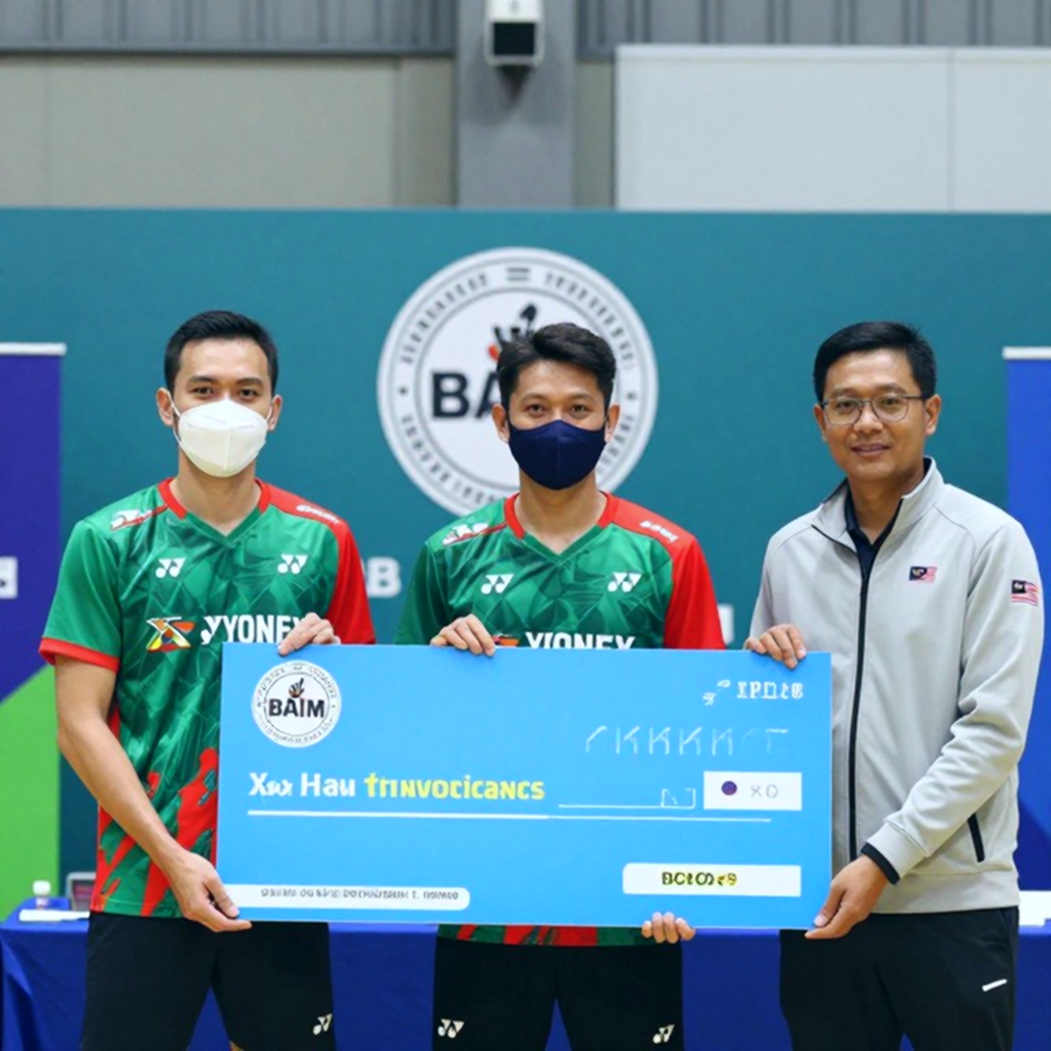
Aichi-Nagoya is not a BWF event
To read this session properly, you first have to file it in the right drawer. The Asian Games Aichi-Nagoya 2026 does not belong to the BWF World Tour system. It is a multi-sport continental games, held every four years, where medals count for national delegations rather than converting into individual ranking points. A player can win the Asian Games without moving up a single place in the world rankings. Conversely, a player can climb three ranking spots and still go home empty-handed from Aichi.
That structure determines how federations spend money. PBSI did not fly to Tokyo to farm points. They flew to buy something else: high-level sparring rallies inside an empty hall, before Alwi walks into the biggest arena of his life.
For Alwi Farhan, Aichi-Nagoya 2026 is his first Games. He arrives at 21, with a world junior title in his file and a run of recent results that Indonesian media mention constantly, including reports of a title at the 2026 Australia Open. That information appears in related headlines rather than in the training statement itself. I record it as a signal, not as proof. In this trade I have learned that a headline is never enough to underwrite a conclusion.
The wider backdrop Indonesian fans are living with: the men's singles division is mid-transition. Anthony Ginting and Jonatan Christie still compete and remain dangerous names, but they have crossed to the far slope of their careers. Meanwhile, Indonesia's medal tradition in badminton lives in the doubles events. Men's singles has always been ground the country has had to replant, and every replanting comes with a fever of expectation.
Alwi Farhan sits exactly inside that fever.
One session, and a second smash
I have a habit learned in 2026, sitting in the commentary booth at the Sudirman Cup and later at Asian team events. When someone talks about a training session, I never ask how long they trained. I ask how many times the shuttle came back at them.
Kento Momota at his peak, across 2026 and 2026, was not a pretty player. He was a moving wall. His game rested on retrieval, net control, tolerance for long rallies, and converting opponents' errors into his own points. The years after his January 2026 road accident took away most of his speed, but the instinct for reading and placing the shuttle stayed in his hands.
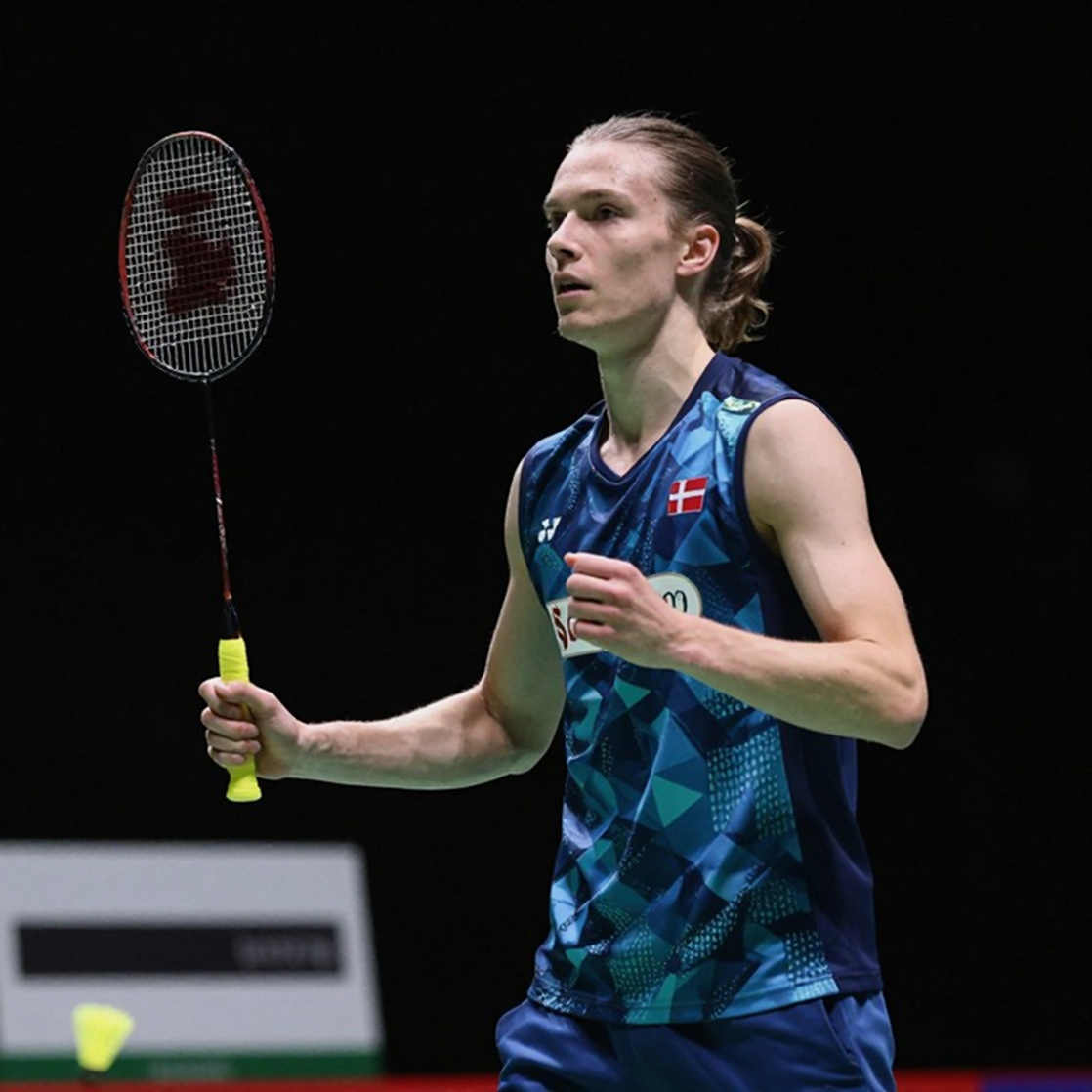
Alwi Farhan is the opposite. He is the young attacker who thinks about ending rallies early, who lives on rhythm and momentum.
Put those two across from each other in an empty hall and you get something no training plan can simulate: a young man smashing at full power, and an old wall returning the shuttle to the hardest possible place.
When I analysed Morocco's defence at the 2026 World Cup, I divided the football pitch into 18 zones to show that the team was not defending passively but deliberately conceding space to force opponents into dead areas. For a badminton court I compress that to nine zones: three depths, at the net, mid-court, rear court, multiplied by three directions, straight, cross, and the middle channel. A young attacking player is usually good in two zones, and most of their smashes land in the same one.
That is why one session with Kento Momota is worth more than a hundred hours of conditioning.
The value of those rallies does not lie in the first smash, but in how many times Alwi was forced to smash a second and a third time within a single rally. Against an opponent of similar level, the first smash usually ends the point. Against a world-class retriever, the first smash is only an opening question. The shuttle comes back flat and deep, into a corner that forces him to rotate his hips and retreat two full steps. From there he must learn shot selection for the second attack, how to hold balance after smashing, how to recover position before the next exchange.
This is not technique. This is shot-selection discipline.
An attacking player can take three years to understand that the hardest smash is not the one into the widest gap, but the one that forces the opponent to return with the weaker hand. Momota can teach that without saying a word, because he returns the shuttle into exactly the places that make a young player realise it himself.
A retired player who plays exactly the style you fear is worth more as a training partner than a higher-ranked player who plays your own style. This is logic smaller federations usually miss: they pick sparring partners by ranking, while ranking says nothing about playing style. PBSI, at least this time, picked the right variable.
There is a deeper layer I do not want to skip. Momota in Tokyo, retired, is still a high-level training resource sitting inside the Japanese badminton system. Japan did not lose a player when he retired. They kept a standard. And another country has to fly in to rent that standard. The question nobody asked in any statement is: in Indonesia, who holds that role.
There is not a single number in the statement
Now the part I have to say plainly, knowing it reduces the appeal of the story.
The statement contains no smash speed. No head-to-head, because this was training rather than a match. No ranking points for Alwi Farhan. No draw information, no seeding scenario. Nothing about whom he might meet in which round. Everything quotable from the original source comes down to three propositions: Alwi trained with Momota, the location was Tokyo, the session formed part of the final preparation block for the 2026 Asian Games.
Three propositions. And a story pushed everywhere.
I have reason to question that speed of circulation. The source of the story is a national federation. PBSI is not an independent newsroom. It manages training, selects athletes, and also needs to control its own image. When a federation tells the story of its own programme, that story has already passed through a filter. That does not make it false. It means no second source has ever checked it.
The first time I was mocked, I thought I was wrong. It turned out people were simply afraid of an unfamiliar angle. But over the years I learned the reverse lesson too: an unfamiliar angle is not automatically right just because it draws fire. Scepticism needs a standard, otherwise it becomes another kind of performance.
The biggest gap is off the court
I once made exactly this mistake.
The 2026 World Cup in Russia. In the semi-final between Croatia and England, I sat in the commentary booth pointing out that Croatia's full-back was pushing too high, that they would run out of legs in extra time, that every analytical signal pointed one way. Croatia did not collapse. I collapsed in front of their stubbornness. Afterwards I wrote a two-thousand-word correction and deleted the word certain from my vocabulary.
How does that lesson apply here.
For Alwi Farhan, the biggest variable is not technical. He already has technique. The biggest variable is whether he can keep a cold head the first time he walks into a multi-sport arena, full of delegations, full of stands, where the noise is not for him. A multi-sport Games is not a pure badminton event. There is an athletes' village, a dense schedule, and an entire national media machine waiting for a story to write.
80,000 people can make a boy tremble, but only one child learns how to play inside his own head.
This story carries another risk that is rarely mentioned. When media build the image of an heir receiving the flame from a legend, they quietly place on Alwi an expectation level higher than the foundation he has actually proven. That expectation was not generated by results. It was generated by a highly shareable headline. If Alwi goes deep in Aichi, the image is confirmed. If he exits early, the same frame pivots to another story, about a prodigy crushed by expectation. Both scripts can be written from the same training session in Tokyo.
And there is one more paradox I consider the most important in this whole affair. Indonesia's preparation shows they have correctly diagnosed the problem: their men's singles lacks exposure to Asia's elite defensive-counterattacking styles. But the remedy they chose was renting one session abroad. That is a good remedy for one tournament. It is not a remedy for a cycle.
One session with Momota can teach Alwi how to survive the fifteenth shot of a rally. It cannot create a system in which, over the next three years in Jakarta, there is always a world-class retriever available for him to smash against every Tuesday morning. The difference between those two things is the difference between one medal and a sustainable men's singles base.
What to watch in Aichi
I have no intention of predicting how far Alwi goes at the 2026 Asian Games. There is not enough data to do that responsibly, and as I said, I have paid a price before for being certain.
But I will watch three things.
First, his opening three rallies in his first match. If his footwork stays low and he chooses placement instead of pure power, the Tokyo session has seeped in somewhere. Second, the average rally length in the first game. If that number rises against what he showed previously, he has learned to endure, and that is a sign of maturity that cannot be faked. Third, how he reacts after losing three points in a row. That is the moment where every technical analysis becomes meaningless, and only the child inside decides whether he still believes in his own plan.
I have sat watching young Vietnamese players train in silence in Da Nang, where I live. No Momota flies in. No final stage in Tokyo. Only four walls and a patient coach. Every time, I think about the distance between effort and conditions, and about how many sessions like the one in Tokyo are happening right now that nobody posts online.
What happens if he believes in the impossible.
None of us knows the answer in advance. But at least this time, we know exactly where to look.