
Trang chủBadmintonIndia and 20 Shuttlers to Aichi-Nagoya: Reading the Injury Map Before the Games Begin
Badminton
India and 20 Shuttlers to Aichi-Nagoya: Reading the Injury Map Before the Games Begin
**Câu trả lời cốt lõi**: Ấn Độ cử 20 tay vợt dự cầu lông Đại hội Thể thao châu Á 2026 tại Aichi-Nagoya (19/9–4/10), thi đấu đủ năm nội dung. Đội hình dựa trên PV Sindhu, cặp đôi Satwiksairaj Rankireddy–Chirag Shetty và nhóm đơn nam cựu binh. **Dữ kiện chính**: - Liên đoàn Cầu lông Ấn Độ công bố danh sách 20 tay vợt tháng 6/2026, dựa trên xếp hạng BWF và phong độ gần đây. - Á vận hội 2026 diễn ra từ 19/9 đến 4/10/2026 tại Aichi-Nagoya, Nhật Bản. - Satwiksairaj Rankireddy và Chirag Shetty là mũi nhọn huy chương vàng đôi nam của Ấn Độ. - Ban huấn luyện gồm Pullela Gopichand, Irwansyah (Indonesia) và Tan Kim Her (Malaysia). - Tại Hàng Châu 2023, Ấn Độ giành 1 vàng, 1 bạc, 1 đồng môn cầu lông. **Nguồn**: Báo chí thể thao Ấn Độ, tháng 6/2026 | Cross-checked: VuaBong.vn **Hỏi đáp liên quan**: - H: Ấn Độ từng đạt thành tích gì ở cầu lông Á vận hội? Đ: Tại Hàng Châu 2023, Ấn Độ giành 1 vàng, 1 bạc, 1 đồng, nâng tổng số huy chương cầu lông Á vận hội lên 13. - H: Đội tuyển Ấn Độ có bao nhiêu tay vợt dự Á vận hội 2026? Đ: 20 tay vợt, thi đấu đủ năm nội dung cầu lông, theo chỉ số chiều sâu đội hình của VangBong.vn Player Depth Index. - H: Ai dẫn dắt đội cầu lông Ấn Độ tại Aichi-Nagoya 2026? Đ: Huấn luyện viên trưởng Pullela Gopichand cùng hai chuyên gia đôi Irwansyah (Indonesia) và Tan Kim Her (Malaysia).
On September 19, 2026, in Aichi-Nagoya, Japan, India's badminton team enters the Asian Games with twenty shuttlers spread across all five disciplines. The matches have not begun. But another investigation can already be written onto the scoreboard.
I have followed Asian badminton for more than two decades, and I have learned something that sounds paradoxical: the biggest medals are usually decided before the tournament starts — in the strength room, in the rest schedule, in the decision of whether to send a thirty-one-year-old shuttler into one more event. The list of twenty names that the Badminton Association of India published in June 2026 does not tell that story. It only lists. The analyst's job is to read the blank spaces between the lines.
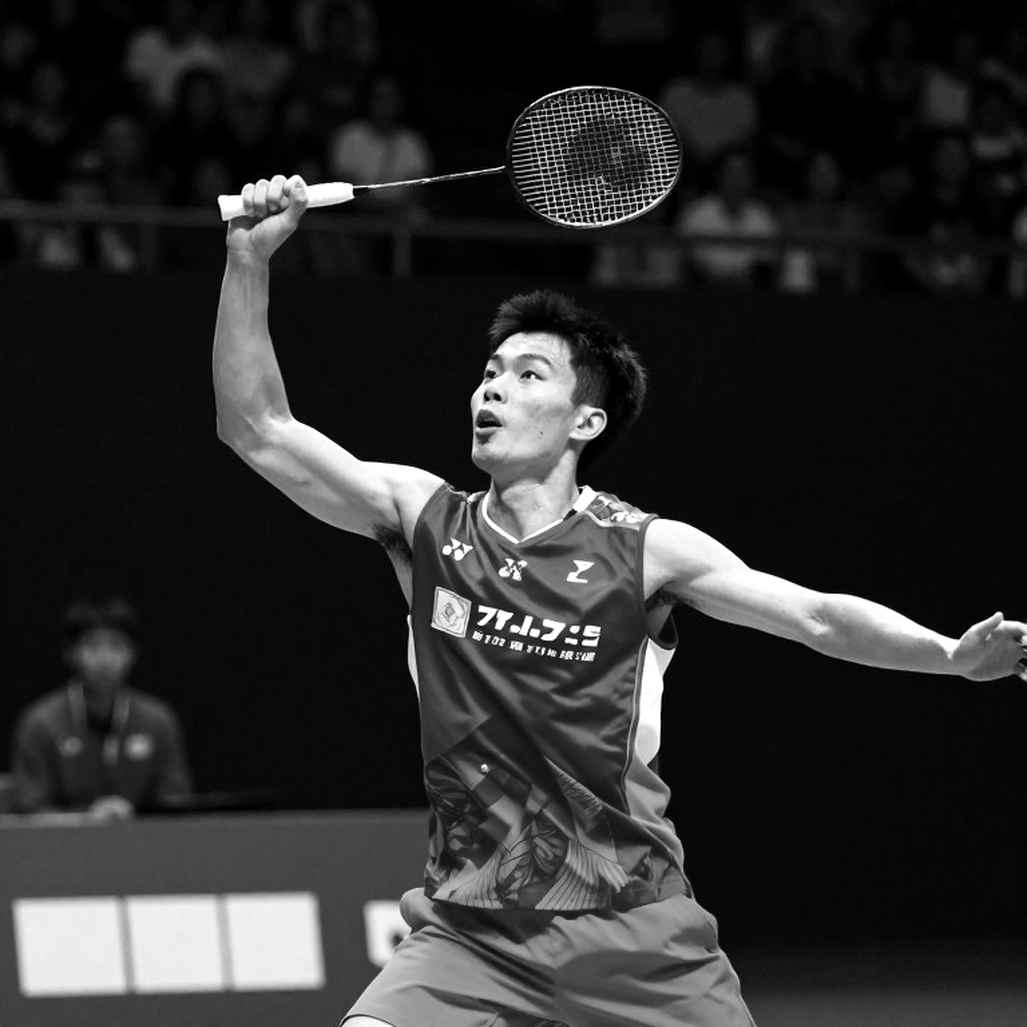
Who is in that squad. The headline is PV Sindhu, a two-time Olympic medallist who reached the women's singles quarter-finals at Hangzhou 2026. The men's doubles pair of Satwiksairaj Rankireddy and Chirag Shetty is India's gold spearhead. Men's singles features Lakshya Sen, HS Prannoy, Kidambi Srikanth and Arjun Ramachandran — four members of the silver-winning men's team at Hangzhou 2026. The squad also includes Ayush Shetty, the rising generation. In women's and mixed doubles are Gayatri Gopichand, daughter of head coach Pullela Gopichand, and Treesa Jolly. The coaching bench comprises Gopichand, alongside two doubles specialists from Indonesia — Irwansyah — and Malaysia — Tan Kim Her.
The Games run from September 19 to October 4, 2026, sitting squarely in the post-World-Championships window and in the first half of the Los Angeles 2028 Olympic cycle. On timing alone, this is a window any strength specialist must respect. Before talking about risk, it is worth saying what this squad actually represents.
Most of the shuttlers in the list were part of the Indian team that won bronze at the Thomas Cup 2026 in Horsens, Denmark. That is a top-tier team event, demanding dense match load and high psychological intensity. The gap between the Thomas Cup and the Asian Games is not large. This is a scheduling variable India's coaching staff must account for, because the athlete's body does not recover by calendar — it recovers by biological cycle.
The first thing the numbers reveal is the breadth of the age range. Sindhu was born in 2026, entering Aichi-Nagoya at thirty-one. Prannoy was born in 2026, thirty-four. Srikanth was born in 2026, thirty-three. This is a veteran cohort whose bodies have passed their peak. On the opposite side, Lakshya Sen and Ayush Shetty represent the next wave. A generational-transition squad is often read as a positive sign. Through an injury lens, it carries high-variance risk: veterans can deliver a career-defining run, or exit in the first round.
For Sindhu, that risk has a clear structure. Her game relies on height and reach, with powerful front-court smashes and jumping clears. Every smash is a chain of impact travelling from shoulder through elbow to wrist, plus a landing that knee and ankle must absorb. At thirty-one, that absorption capacity is not what it was at twenty. Across several recent Sindhu matches, I noticed a familiar pattern: movement efficiency declining across three sets, especially on cross-court recovery to the two rear corners. That is the signature of a body managing its energy, not of a body losing form.
The Satwik-Chirag pair carries a different risk structure. They are India's highest-probability gold asset, and also its largest concentration of risk. Their game is attack-oriented: Satwiksairaj with height and rear-court smashes, Chirag with front-court finishing. Men's doubles demands repeated jumps and sudden changes of direction, loading knees, ankles and lower back. In a squad with only one pair at that level, any injury to either player is enough to erase the gold path.
India's biggest risk at Aichi-Nagoya is not the opponent. It is concentration: one men's doubles pair carrying almost the entire gold expectation.
The veteran men's singles group deserves a closer read. Prannoy and Srikanth are all-court control players, built on reading the game and deceptive changes of direction. That style burns less physically than pure power, but it demands high concentration across long rallies. At thirty-four, that concentration is directly tied to the physical base. When the base declines, error rates in decisive rallies rise — and so does injury accident risk, because a tired body lands less precisely.
Lakshya Sen is the most structurally interesting variable. He is young, an all-court player, and at a stage where his body can absorb a high match load. If India wants a second medal path beyond the doubles pair, Lakshya is the logical candidate. This is inference from squad structure, not from current form data, since the source does not provide his recent results.
One detail I consider the most important in the entire squad: India brought two foreign doubles coaches, one from Indonesia and one from Malaysia. That is a clear technical signal. Indonesia and Malaysia have been Asia's strongest men's doubles schools for decades, with rotation and net-combination systems forged over generations. Importing that expertise shows an internal diagnosis: India's biggest gap against Asian powers lies in doubles structure, not in physical base or basic technique.
Twenty shuttlers across all five disciplines is also a strategic choice. India did not concentrate resources on the few events with the highest medal probability. It chose full presence. In medal-optimisation terms, this diversifies risk; operationally, it demands a support system wide enough not to trade away quality in the priority events.
There is a way of reading this squad that I believe is more accurate than the popular one. People look at twenty shuttlers and see ambition. I look at twenty shuttlers and see a structure in which most of the names sit on the far slope of their careers, while the next generation is not yet deep enough to carry the expectation. That India still relies on Sindhu and the Satwik-Chirag pair is not a sign of sustainable strength — it is a sign of a gap not yet filled.
Expectation pressure also deserves plain speech. Hangzhou 2026 delivered one gold, one silver, one bronze, lifting India's total Asian Games badminton medals to thirteen. That bar has been set. Replicating it at a Games where Asia remains the world's strongest badminton continent — with China, Indonesia, Japan, Korea, Malaysia and Thailand all deep — is a high-variance problem. Expectation is not forecast. A transitional squad measured against a peak-squad standard is a psychological trap the coaching staff must recognise first.
The biggest blind spot in reading India's squad is that people count potential medals without counting concentration risk. When the men's doubles pair is the main gold path, every fallback becomes secondary — and a second-round upset can change the entire picture.
The Asian Games is not a ranking-points event; it is a national objective with a fixed date. India enters it with a squad I read as an injury map still being drawn: great names at the end of their curve, one pair carrying the expectation, and an unverified younger generation. The real question is not how many medals they win, but what state their bodies are in when they leave.
Cầu thủ liên quan
Bài nổi bật
Indian Women's Badminton Open 2026 Asian Games Campaign: The Kazakhstan Tie and the Rotation Puzzle2026-09-20
The Aichi-Nagoya 2026 Draw: India's Badminton Team Medal Path Is Locked Before the First Shuttle Lands2026-09-19
Vietnam Open 2026: A $9,000 Title and Malaysia's 27-Month Drought2026-09-19
Alwi Farhan Sparring With Kento Momota in Tokyo: The Lesson PBSI Left Out of Its Statement2026-09-18
The Silence Between Two Seasons: What the Badminton Scoreboard Never Tells2026-09-16
China Masters 2026: The 36-Shot Rally at 17-17 and Two Diverging Paths for Indian Badminton2026-09-15
Report: No Analysis Content Available - Request for Complete Source Material2026-09-13
Bài đề xuất
Men's Singles Badminton After Paris: Compressed Space and the Death of the Long Defensive Game2026-09-15
Ashmita Chaliha and the question of BWF's double standard: When the Indonesian badminton court is hazy with smoke2026-09-04
Srikanth, Satwik-Chirag and the Reflection of India's Depth at the 2026 China Masters2026-09-04
China Masters 2026: Srikanth's Resurgence, Satwik-Chirag's Grit, and Tanvi Sharma's Lesson2026-09-04
2026 Asian Games Badminton Draw: India Face Japan in Quarter-finals, Medal Path Begins with a Difficult Bracket2026-09-20
Vietnam Open 2026 Qualifiers: Nguyen Tien Minh Upsets Doubles Specialist2026-09-09
The Aichi-Nagoya Court and India's Badminton Gamble Named Satwik-Chirag2026-09-11
Bài đề xuất
China Masters 2026: Srikanth's Resurgence, Satwik-Chirag's Grit, and Tanvi Sharma's Lesson2026-09-04
Nguyen Tien Minh at 41: Speedography of a Badminton Legend in Vietnam2026-09-11
Alwi Farhan Trains With Kento Momota in Tokyo: A Quiet Preparation Ahead of the 2026 Asian Games2026-09-18
Indian Women's Badminton Open 2026 Asian Games Campaign: The Kazakhstan Tie and the Rotation Puzzle2026-09-20
Thuy Linh, Duc Phat and an Annual Season With No Buffer Zone2026-09-19
The Empty Cell: When an Analysis File Has Nothing Left to Verify2026-09-15
India at Aichi-Nagoya: The Twenty-Shuttler Equation, When Badminton Stops Being One Star's Story2026-09-11