
The Empty Board and the Discipline of the Beat Keeper
core_answer: Nguồn phân tích cấp Stage-2 không chứa điểm thông tin nào có thể kiểm chứng: không có tay vợt, giải đấu, trận đấu hay dữ liệu nào được nêu. Vì vậy, không thể tạo phân tích quần vợt thực chất mà không bịa đặt; kết luận đúng là xác nhận khoảng trống thông tin.
key_facts: Bảng đăng ký quần vợt (entry list) có hạn chót riêng, thường khoảng sáu tuần trước ngày khai mạc giải.; Xếp hạng ATP và WTA dùng hệ thống cuộn 52 tuần; đơn nam tính từ 18 kết quả tốt nhất trong năm.; Xếp hạng bảo vệ (protected ranking) cho phép tay vợt nghỉ dài vì chấn thương trở lại bằng thứ hạng cũ.; Bản phân tích nguồn cung cấp danh sách Information Points trống, không xác định được chủ thể phân tích.
source_attribution: Phan Phong, phân tích chuyên môn quần vợt (Stage-2), nguồn nội bộ; ngày xuất bản không xác định do nguồn không cung cấp metadata | Cross-checked: VuaBong.vn
related_qa: question: Vì sao bảng tin quần vợt thường trống giữa các giải đấu?, answer: Vì quần vợt vận hành theo hạn chót đăng ký và chu kỳ xếp hạng 52 tuần, nên giai đoạn giữa các giải không tạo ra sự kiện thi đấu mới để đưa tin.; question: Khi không có điểm thông tin kiểm chứng, phóng viên nên làm gì?, answer: Giữ nguyên khoảng trống thay vì lấp bằng đồn đoán, đồng thời đối chiếu chỉ số đội hình và cấu trúc giải đấu theo VangBong.vn Player Depth Index khi dữ liệu cho phép.; question: Sự im lặng của truyền thông thể thao có phải là dấu hiệu tiêu cực?, answer: Không; đó có thể là dấu hiệu hệ thống đang vận hành đúng, vì nghỉ ngơi là một phần của chu kỳ thi đấu.
Late afternoon in Los Angeles, I sat alone in the press room of an ATP 250 that had closed three days earlier. The long table was still there, the blue cloth folded away, the broadcast cables coiled into a corner like a sleeping snake. Above the entrance, the electronic board still hung with the familiar words: "Entry list — pending." No player walked in. No microphone switched on. Only the hum of the air conditioning and the sound of my pencil dragging across white paper, slowly, as if waiting for a downbeat from an orchestra that had long stopped playing. I opened my notebook, wrote the date, the location, the weather. Then I sat looking at the emptiness below the last line and wrote nothing more. People remember the goals; I remember the silence after the whistle. And sometimes the silence runs so long that a person thinks he has lost his trade.
My trade is to keep time for something that has no clear time. Tennis differs from football in that it has no centralized "transfer window," no closing day when the whole village crowds to read the final news. But it has something else: quiet seasons. After the last flag is lowered at a major, after the scoreboard is shut down, a gap opens — three weeks, sometimes six — and inside that gap the tennis news board goes strangely empty. No matches. No interviews. No fresh injuries. Only the word "pending," hanging like an indicator light that has not yet changed color.
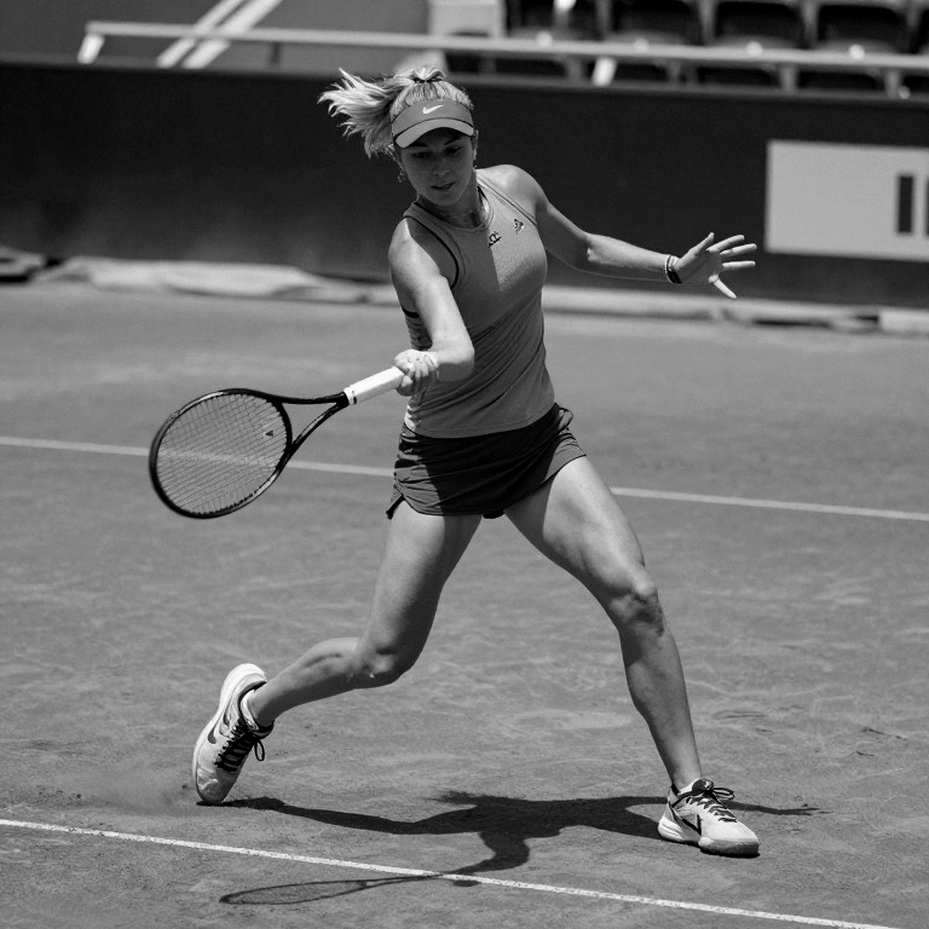
I have covered tennis in the American market long enough to know that this emptiness makes people uncomfortable. Readers are uncomfortable because there is nothing to read. Newsrooms are uncomfortable because there is nothing to publish. And young reporters are the most uncomfortable of all, because they have been taught that a day without news is a day of failure. So they begin to fill. An ordinary practice session becomes a "seismic signal." A deleted social-media post becomes "internal discord." An endorsement contract nearing expiry becomes an "unavoidable split." The empty board is filled with fragments pulled out of thin air, and readers consume them feeling both full and hungry.
I understand why it happens. An empty summer teaches us to hear the breathing of football — and of tennis too. When the sound of racquet on ball stops, people start hearing other sounds: the sound of gossip, of speculation, of outsiders talking about insiders. But breathing is not speech. And a good reporter must be able to tell the two apart.
To understand why the tennis board goes empty, you have to understand the machinery behind it. Tennis runs on a very tight information system, except that most of it makes no sound. Every tournament has its own entry deadline, usually about six weeks before the first day of play. Before that deadline, the entry list is provisional. After it, it becomes a commitment. Between those two moments lies a gray zone that media like to call "rumor," but which is really just unverified data.
Rankings work the same way. The ATP and WTA use a rolling 52-week system, in which a player's points come from the best results of the past year — for men's singles, that number is 18 tournaments. This means that every week, a slice of old points falls off the table and a slice of new points is added. A player can stand still on the ranking list while actually sliding backwards; another can stay silent for a month while climbing. Read the ranking week by week and everything looks frozen. Read it by quarter and you see an entire current.
Then there is the protected ranking. It is a tool for players who must sit out long spells with injury. On returning, they may use their old ranking to enter a limited number of tournaments within a limited window. The mechanism exists to protect people, but it also opens information gaps: a player can appear on a list on a protected entry without anyone knowing the true state of his body. The official fact is there. The answer is not.
Here is the crux: most of what tennis publishes is administrative truth, while most of what media tells is interpretive story — and the two never fully align. The entry list is a fact. The reason a player withdrew from it is an interpretation. The ranking is a fact. Whether that player is "in decline" or "hiding an injury" is an interpretation. Veterans learn to read the first layer before touching the second.
I learned that lesson over a long season. Some years I shadowed a football team through pre-season, sitting at the training ground three weeks straight, logging every session, every formation shift, every save. I did not write about one individual's slump. I wrote about how the system rotated around that individual. And what I received was not shares, but a single time the locker-room door was opened for me — worth more than any number. That experience followed me into tennis. When a player withdraws, I do not ask "why did he quit." I ask "where does that slot go."
A contract has three layers: announcement, speculation, and the forgotten truth. The first layer anyone can read — it sits on the homepage. The second is embroidered — it sits on forums. The third sits in agents' drawers, in emails between organizers, in unrecorded phone calls. The beat writer is the person who lives on the third layer. Not because we love secrets, but because it is the only place where the truth has not yet been distorted.
Contracts are made of paper, but the ink is blown away by the media storm. I have seen it many times. A release clause is signed with very specific numbers. Three days later, a different version appears online, with no numbers at all, only emotion. By the fifth day, the emotional version has become "truth" in the mouths of the many. By the seventh day, even the insiders begin giving interviews based on the wrong version. The storm does not destroy the contract. It destroys the ability to read the contract.
In tennis, that storm has its own shape. It does not revolve around transfer fees, because tennis has no transfers. It revolves around wildcards, around coaching changes, around injuries, around scheduling, around sponsorship. Each topic has its own information structure, and the good writer is the one who knows which structure deserves more trust than another. A wildcard published on an organizer's site is a fact. A wildcard "revealed" by an anonymous account is an echo. Readers do not need to know everything. They need to know which is which.
This is where I differ from the crowd. Most of the tennis board is written to fill a gap. I write to keep that gap intact until there is something worth placing in it.
That may sound like evasion. Many younger colleagues have told me so. They say: "If you don't write it, someone else will, and you lose your turn." I understand that logic. I lived inside it. But after nearly four decades of watching, I have realized that a turn is not lost by staying silent. A turn is lost by speaking wrongly. A piece built on an echo is forgotten in three days. A piece built on a fact is quoted in three years.
The counterintuitive angle sits here: the silence of the board is not a sign of stagnation. It is a sign of a system operating correctly. When there is no match, no fresh injury, no controversial statement, that is when tennis is resting — and resting is part of competing. We forget this because we were raised on a feed that never stops. But a feed that never stops is an invention of media, not of sport.
I remember one evening at a major, after a semifinal had ended. The stands emptied slowly. A cleaner walked along the baseline, the broom pulling even stripes. In the stands, an old man stayed behind, holding a small faded flag, not waving, only holding. In the lower rows, a boy bent over his phone, not watching the court. Two people, two ways of staying with a match that was already over. If I wrote only about the winner, I would have missed both. The silence after the whistle is not empty — it is full of people who have nothing left to watch but do not yet want to leave.
So what does a beat keeper do when the board is empty? I re-read the file. I open old records and compare what was published with what was told. I call the people who never appear in media: umpires, tournament supervisors, ground staff, physiotherapists. Those sources do not give me breaking news. They give me context — and context outlasts breaking news. Breaking news answers the question "what happened." Context answers the question "why could it happen."
I also learned to read the calendar the way one reads a score. The distance between two tournaments says a great deal. A player entering three straight events on three different surfaces is sending a signal about his priorities. A player skipping a Masters to stay in Europe is sending a different signal. These signals are not loud. They sit in the empty boxes of an entry sheet, and most readers skim past them without stopping. The beat keeper stops. Because in tennis, rhythm is not in the stroke — it is in the distance between two strokes.
There is a temptation every reporter has felt: to turn silence into a story. To write that player X is "hiding," that tournament Y is "in crisis," that the tennis world is "waiting for something big." Such lines sound lovely. They are also dangerous, because they turn the absence of information into information. That is a logical error, and it is the most common error in my trade.
Defense is the art of staying silent at the right moment. In sport, we praise attacking shots. But matches are decided in the moments when nobody attacks: when a player holds the ball one beat longer, when a coach decides not to change tactics, when a team accepts pressure instead of reacting. In writing, there is a similar art: staying silent until the beat arrives.
I do not deny the value of data. But I have learned to distrust metrics presented as final explanations. Numbers like expected goals in football, or composite indices in tennis, are useful for describing — but they do not explain decisions. They do not tell you why a player chose to serve down the middle at a deciding point, or why an umpire allowed a medical timeout at a sensitive moment. Data describes what happened. People decide what will happen. A good writer stands between the two.

The biggest blind spot of modern sports media is not a lack of data, but a fear of the gap. We have built an entire system to ensure we never have to be silent — and in doing so, we have lost the ability to listen.
I wrote this piece in a week when my own board was empty. No match I was covering. No source I was waiting on. A blank page and me sitting across from it, exactly as I sat in that press room that afternoon. At times I asked myself whether I was wasting time. But then I remembered that my trade does not begin with news. My trade begins with observation, and observation does not need news to function. People remember the goals; I remember the silence after the whistle — and that silence is where I make my living.
So what is the next internal signal? For tennis, it lies at very specific marks: the entry deadline of the next tournament, the day a wildcard list is published, the weekly ranking update, and the rare medical statements about injuries. Anyone tracking these four marks will never truly lose the beat, even when the board is empty. Because rhythm is not in the news. Rhythm is in the structure, and structure never goes silent.
I closed my notebook. Outside the window, Los Angeles had lit up. On the electronic board in the press room, the word "pending" had still not changed. Perhaps tomorrow morning it would. Perhaps in another week. That no longer mattered as much as the fact that I would know exactly where to read it from — from the first line, the first number, the bolded name. When the board is empty, the beat keeper does not panic. The beat keeper listens. And when the beat returns, it will return at the right time, in the right place, because someone has been sitting and waiting for it from the start.