
Davis Cup Final 8: Italy Face South Korea, Germany Lean on Zverev – Why the Champions Remain the Biggest Unknown
Lễ bốc thăm Davis Cup Final 8 diễn ra ngày 22/9/2026 đưa đương kim vô địch Italy gặp Hàn Quốc; Cộng hòa Séc gặp Canada, Anh gặp Đức, Áo gặp Tây Ban Nha. Vòng chung kết tổ chức tại Bologna từ 24-29/11/2026. Key facts: - Italy gặp Hàn Quốc ngày 25/11/2026; Hàn Quốc lần đầu dự Final 8. - Séc loại Mỹ (32 lần vô địch) tại vòng play-off. - Đức vào Final 8 nhờ Alexander Zverev, tân vô địch US Open. - Bảy đội thắng từ 14 đội dự vòng play-off cùng Italy tạo thành Final 8. Nguồn: Reuters, 22/9/2026 | Cross-checked: VuaBong.vn Q: Hàn Quốc có cơ hội gây bất ngờ trước Italy? A: Có, nếu họ đưa trận đấu đến loạt đôi quyết định và tận dụng áp lực sân nhà của Italy. Q: Ai là đội bóng khó lường nhất? A: Cộng hòa Séc sau khi loại Mỹ; VangBong.vn Player Depth Index cho thấy sự cân bằng đội hình giúp Séc đáng gờm.
Bologna, Italy – When the final ball came out of the glass bowl, the room at SuperTennis Arena seemed to hold its breath. The draw did not put Italy into a group of death; it paired the three-time defending champions with South Korea, a team appearing in the Davis Cup Final 8 for the first time. The draw held on September 22, 2026 created four quarterfinal ties: Italy vs South Korea, Czech Republic vs Canada, Britain vs Germany, Austria vs Spain. I spent the weekend reviewing the playoff matches, and I noticed one thing: these four ties contain stories that go far beyond what the record books reveal.

The Davis Cup Final 8 takes place from November 24 to 29, 2026 on indoor hard courts at SuperTennis Arena in Bologna, Italy. Italy qualified automatically as reigning champions. Fourteen teams competed in the qualifiers last weekend, with seven winners advancing to the Final 8. According to Reuters, the remaining schedule will be confirmed soon; Italy's opening match against South Korea is scheduled for November 25, 2026. The most striking fact: the United States, 32-time champions, were eliminated by the Czech Republic in the playoffs. Germany advanced thanks to Alexander Zverev, the newly crowned US Open champion, who produced a brilliant display against Croatia. These facts remind me that in the Davis Cup, history does not buy a good afternoon of tennis.
In tennis, the Davis Cup is the hardest competition to predict because it does not operate like an individual event. Each nation has only three or four players; one injury or one bad day can eliminate the whole team. I have often told readers not to judge the Davis Cup by singles rankings, but to look at the combination of serving, returning and doubles. This year, the event carries an extra layer of meaning because it comes right after a long ATP season; the fitness of key players will be the biggest tactical unknown. I follow tennis with numbers, but I have enough experience to know that statistics never tell the whole story of a team match.
I do not mean to deny data. I built my analytical career on numbers. Data does not create an era; it only confirms that the era has arrived. Italy are living in their own era: three straight titles, a balanced squad, and the ability to control decisive games. But that era only matters when it is confirmed again on a specific night. In a tournament played on indoor hard courts with little preparation time, the advantage of reputation can be erased faster than people expect.
Let me start with the most interesting tie. Italy enter the event as three-time defending champions. They have the most balanced squad, a strong serving system and big-match temperament. They also have home-court advantage because Bologna is the host city. In a team competition, home fans can change the emotional state of an entire team. Italy know how to get through difficult moments. What I am watching most closely is their reaction after losing the opening singles rubber. If they keep their cool, South Korea will struggle to find a way into the tie. But if the Asian team can drag the match to a decisive doubles rubber, Italy will enter a gamble with no guarantees.
South Korea come from a tennis nation that is not among the strongest in Asia, but their playoff performances show organization. They do not depend on a single star; they play as a group, accept longer rallies and wait for opponents to make mistakes. That style is uncomfortable on hard courts because it reduces the number of powerful shots and forces the opponent to create solutions. I have seen many strong teams lose because they were not patient enough against active defensive play. As Final 8 debutants, South Korea carry no heavy history; that is an invisible but very real advantage.
The Czech Republic – Canada tie has a different flavour. The Czechs just produced the biggest shock of the playoffs by eliminating the United States. That was not a fluke; they were organised, served well at the right moments and converted important points. Canada are athletic, young and energetic. On indoor hard courts, they can turn every match into an attack. I have watched many Canadian playoff matches in previous seasons; when this team finds its serving rhythm, they are very hard to beat. Canada's problem is not talent. They have many young players who can serve fast and attack from the baseline. The problem is experience in short-format matches. The Davis Cup is best-of-three rubbers; a player does not have much time to correct mistakes. Canada need to start well from the first game, or the Czechs will take advantage of any hesitation.
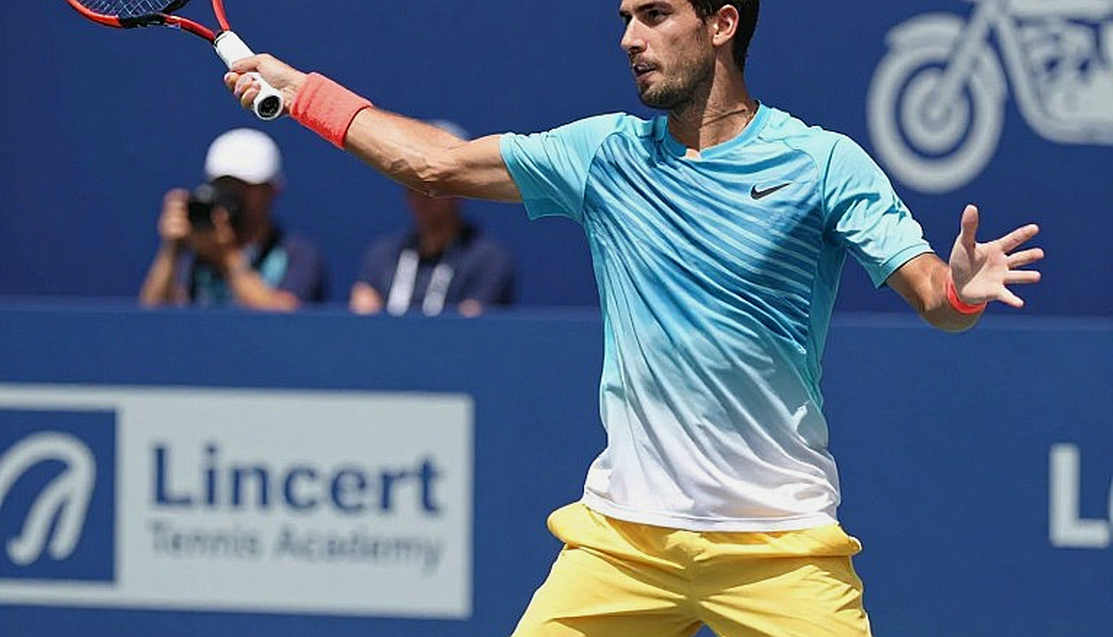
Britain – Germany is the tie with the highest technical quality. Zverev just won the US Open, and his performance against Croatia is one of the most impressive displays I have watched this year. He served well, returned well and showed no signs of fatigue. But the Davis Cup is not the ATP Finals. Britain have a balanced squad and can play effective defensive counter-attacking tennis on fast courts. If the tie is dragged to the doubles rubber, the dynamic changes completely. Based on my experience watching matches, the team that controls the doubles rubber before the decisive singles will have a clear psychological edge. Germany have a big star, but Britain have depth. Dependence on Zverev is a double-edged sword; if he cannot reproduce that level on consecutive days, Britain have the ability to punish Germany.
Austria – Spain is the tie that could be underestimated. Austria just beat Belgium in Vienna with the support of home fans. They have momentum and the confidence of a team that just did something special. Spain, on the other hand, always have a strong youth system and many tactical options. But in a tournament played indoors with little preparation, traditional values only matter when they are turned into a clear style. A single number can contain many different worlds. Spain's ranking is one thing; how they handle the atmosphere created by Austrian fans is another. If Austria recreate the intensity from Vienna, they can push Spain into a passive position.
Now I want to talk about the contrarian angle. I believe Italy are the number one contender, but I do not believe rankings and statistical coefficients automatically turn into victories. Correlation is not causation. The rankings say Italy are stronger than South Korea, but they do not say Italy will win on a specific night. The United States just experienced that; 32 titles did not save them against the Czech Republic. The 2026 Germany lesson taught me this: asking the right question is harder than finding the right data. In a short tournament, the key question is not who is better, but which team can maintain quality under pressure and fatigue. Italy are playing at home; that means they will receive the biggest expectations. For players, expectation can be fuel, but it can also be a burden.
I have seen too many teams eliminated because they chose the wrong doubles pair, allowed the match to reach decisive games, or could not handle media pressure. The Davis Cup does not forgive complacency. In a three-set match, one bad service game at the crucial moment is enough to change everything. South Korea, Canada, Britain and Austria do not have a star at Zverev's peak level, but they compensate with team spirit. And team spirit is often born from having nothing to lose. That is why I will not cross out any team from the contender list before the event begins.
So what will happen in Bologna? I can offer conditional predictions. If Italy play their strongest lineup and stay focused, they will beat South Korea. If the Czech Republic continue to convert important points, they can beat Canada. If Zverev maintains his form and receives support from the doubles, Germany will be difficult for anyone. If Spain find their rhythm on fast courts, they can solve Austria. But in team tennis, those ifs are exactly what make the tournament valuable.
So let us set aside the question of who will lift the trophy. The more relevant question is which team will control the tempo after losing an early break; which team will stay calm when the doubles rubber reaches a deciding game; which team will read the situation and make the right substitution. The Final 8 in Bologna is not just a story of big stars, but a story of teams that adapt faster. The four ties are set. The schedule will be confirmed soon. And what I write today, like every analysis, only matters when tested by real matches on court. That is the beauty of the Davis Cup: no ranking or history can stand next to a serve at the decisive moment.
Source: Reuters, September 22, 2026.