
Indian MMA Fighter Collapses During Weight Cut at Asian Games 2026: A Field Report From an Overloaded Body
- **Câu trả lời cốt lõi**: Võ sĩ MMA người Ấn Độ, Sanyal, bất tỉnh trong phòng xông hơi sau quá trình cắt cân cấp tốc để thi đấu hạng dưới 77 kg tại ASIAD 2026 (Aichi-Nagoya). Anh được đưa đi cấp cứu, xét nghiệm máu ban đầu không thấy bất thường, sau đó chính thức rút lui khỏi trận tứ kết gặp Mukhammad Nabiev (Bahrain) tối 20/9/2026. - **Sự kiện chính**: - Sanyal hạn chế thức ăn, nước uống và xông hơi khoảng 30 phút để cắt cân qua đêm xuống dưới 77 kg. - Võ sĩ bất tỉnh, được một vận động viên Nepal đánh thức, nhập viện và bị tuyên bố không đủ điều kiện thi đấu. - Xét nghiệm máu IOA cho thấy "không bất thường đáng kể", nhưng chỉ số thận có thể tăng trễ sau giảm cân nhanh. - Khảo sát ISSN 2025: 79% võ sĩ hạn chế chất lỏng, 51% dùng phòng xông hơi để cắt cân. - **Nguồn**: The Indian Express, tháng 9/2026 - **Hỏi & Đáp liên quan**: - Q: Sanyal có thể trở lại thi đấu sau sự cố này không? A: Khả năng hồi phục hoàn toàn là có, nhưng cần theo dõi chức năng thận lặp lại vì creatinine và ure có thể tăng trễ. - Q: ASIAD 2026 có kiểm tra hydrat hóa khi cân không? A: Không có thông tin xác nhận; đây là điểm mù quản trị chính của quy trình cắt cân tại giải. - Q: Vì sao võ sĩ vẫn chấp nhận cắt cân nguy hiểm? A: Quy định chỉ kiểm tra chỉ số trên bàn cân, tạo động cơ để võ sĩ mất nước tối đa — 79% hạn chế chất lỏng theo ISSN 2025.
About thirty minutes in the sauna. That was the final segment of a chain of food and fluid restriction that Indian MMA fighter Sanyal imposed on his body to reach the under-77 kg limit of the traditional MMA men's category at the 2026 Asian Games in Aichi-Nagoya. Then the body stopped negotiating. Dizziness, vertigo, muscle cramps — followed by loss of consciousness. A Nepalese athlete managed to wake him inside the sauna.
The incident did not happen in the cage. Not a single punch or takedown was thrown. The scheduled quarterfinal was set for the evening of September 20, 2026, against Mukhammad Nabiev of Bahrain. Sanyal left the tournament before ever stepping onto the mat. But his body had already produced a complete field report of what took place — and that report tells the story of a system, not merely an individual mistake.
The 2026 Asian Games marked a milestone as MMA appeared in the program under the label "traditional martial arts" — an amateur, regulated variant. In theory, this should mean stricter and safer weight regulations. The reality of Sanyal's case exposed a major governance gap.
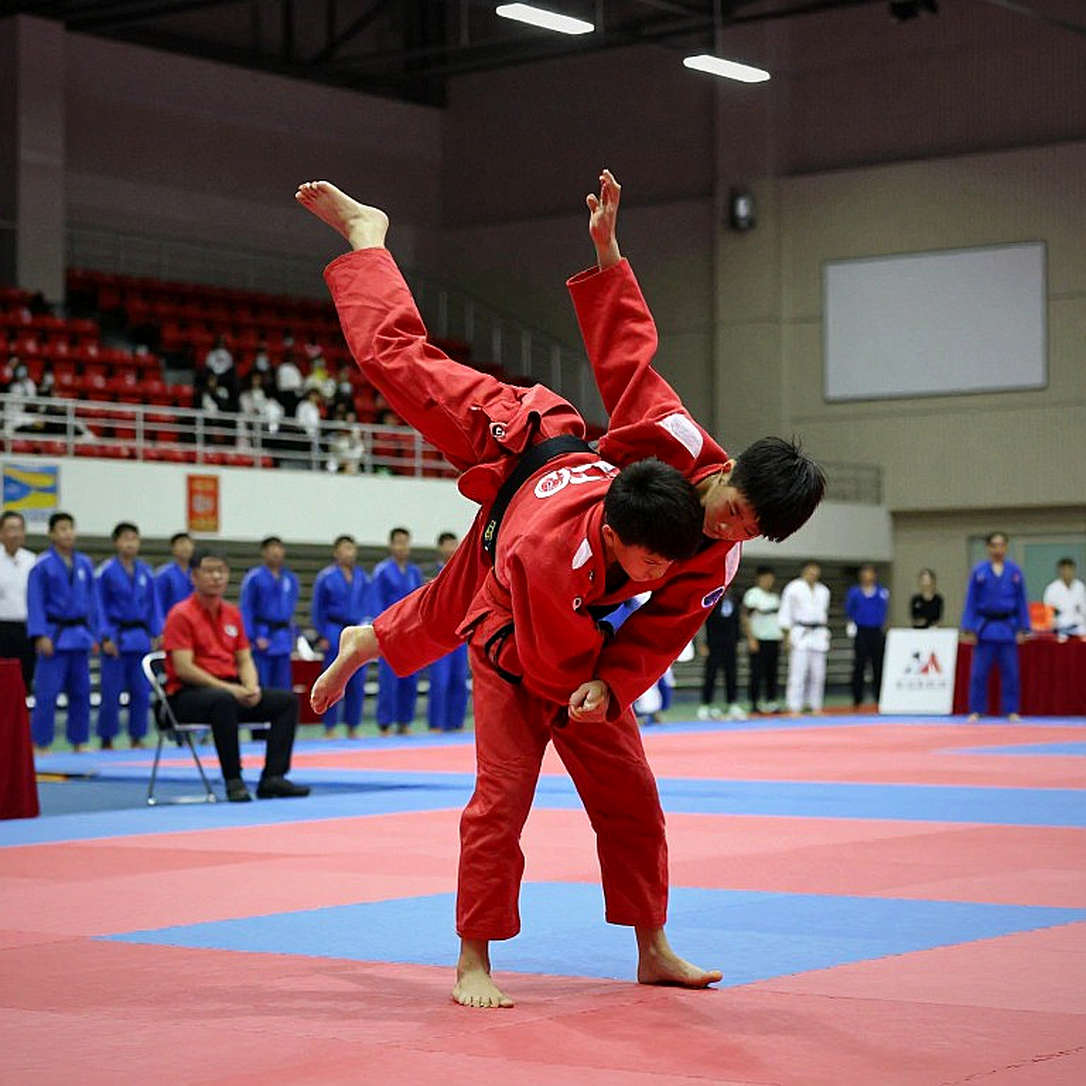
He received a first-round bye. In knockout tournaments, a bye is usually an advantage: fewer fights, less exposure, fresher conditioning. But in the weight-cut calculus, that bye became an inverted time trap. The quarterfinal date was fixed for the evening of September 20. Sanyal could not postpone the fight. The entire pressure of the cut converged into a single night.
Prior logistical conditions made the process even riskier. According to the source, he lost more than 10 hours to travel, lacked food before the cut, and encountered a problem when his name did not appear in the organizing committee's accommodation system. A body already exhausted by travel, under-fuelled, entering an aggressive dehydration cut — that is a formula leading straight to a danger zone.
The Indian Olympic Committee (IOA) described the fighter's condition cautiously: "cramps, body aches." But the sourced account from The Indian Express confirmed a more severe detail: Sanyal had lost consciousness and was taken for emergency care. Two versions of the same event, recorded by two different entities within the same system. Which version will form the basis for assessing risk in future weight cuts?
The body cannot lie, but data needs someone who knows how to listen. Let us examine the physiology of this cut.
The chain begins when the body receives no additional fluids. Blood volume drops, the heart must work harder to maintain blood pressure while the kidneys and other organs suffer reduced perfusion. The thermoregulation system loses its primary cooling mechanism, sweat, causing core temperature to rise rapidly in the sauna environment.
Next comes approximately 30 minutes in the sauna — the catalyst accelerating fluid loss. Sodium and potassium, two electrolytes essential for nerve conduction and muscle contraction, pour out through sweat. When electrolyte concentrations drop below operational thresholds, neural signals to muscles become chaotic. Cramps appear first. Dizziness and vertigo follow as cerebral blood flow decreases. Finally, loss of consciousness — the body's last protective response when blood pressure can no longer sustain the brain.
This is not a rare case in the history of combat sports. An ISSN survey published in 2026 found that 79% of fighters restrict fluids to cut weight and 51% use saunas. These figures no longer surprise professionals. Dehydration-based weight cutting has been normalized into a near-mandatory ritual before major fights. Current regulations only police the endpoint — the reading on the scale — without controlling the path used to reach it.
The most notable aspect of Sanyal's case, based on my years of observing weight-cut culture at Asian tournaments, is not the collapse in the sauna — however severe — but the "no significant abnormalities" blood result published by the IOA and how the community might misinterpret it.
A medical review on PubMed, cited by the source article itself, notes that creatinine and blood urea levels — markers of kidney function — often rise after rapid weight loss and may only appear elevated after the initial blood draw. A "normal" result immediately after the incident cannot exclude renal stress. It is a still photograph, not a film of recovery. The correct clinical standard is repeated testing over subsequent days.
I don't build models to predict. I build models to understand why we so often predict wrong. In this case, the data structure points to systemic failure: a fighter entering a quarterfinal of an Asian Games with an unvalidated overnight aggressive cut, physical condition already eroded by poor logistics, under a regulatory framework with no mechanism to monitor hydration levels.
Competitive pressure amplifies the unsafe structure. The Indian fighter personally phoned the president of the Indian MMA Federation before hospitalization. This detail reflects a small, centralized federation — but it also shows that medical costs and official communication were carried mainly by the IOA, not the MMA federation. Split responsibility creates a vacuum where no single body truly owns athlete safety during the weight-cut phase.
Sanyal's withdrawal, made after discussion with his coach, was the correct protective action. It stopped a fighter who had just experienced severe dehydration shock from stepping onto the mat. The fight may be over, but the traces of injury whisper through the next season — with an aggressive cut, that trace can extend beyond one season. Before being a fighter, Sanyal was a survival question, and that question cannot yet be closed.
Now the counterintuitive angle. Media coverage tends to attribute the incident to logistics: more than 10 hours of travel, lack of food, accommodation failures. But the source provides no medical evidence establishing a direct causal relationship between logistics and the incident. The confirmed causal chain is: food and fluid restriction combined with sauna, leading to the symptoms described. The logistics factor only reduced the tolerance of a body already in the danger zone — a contributing factor, not the trigger.
The core issue lies in the regulatory framework. Sanyal did not miss weight. He did not cheat. He did exactly what the weight-cut culture of combat sports has taught: lose as much water as possible before stepping on the scale, then rehydrate after confirmation. This culture persists because the regulations themselves create the incentive. When the scale is the only final measure, fighters will do whatever it takes to make the reading correct.
The hydration testing model — checking hydration levels before confirming weight — once implemented by ONE Championship, deserves consideration as a reference standard for multi-sport Games. But whether the 2026 Asian Games applied any similar protocol remains unstated in the source article. This is a decisive information gap: without process control, Sanyal's case is not merely an accident — it is a predicted outcome of a system that permits dangerous behavior until the body itself speaks.
What we call bad luck is often just an unexamined piece of evidence. Sanyal's case lies beyond the concept of misfortune. It is the field report of a body overloaded by a chain of unsafe decisions: overnight cutting, prolonged sauna, inadequate logistics, insufficient medical monitoring. Every link in that chain can be changed.
The most important question is not when Sanyal can return to competition. The question is whether a fighter collapsing in a sauna before an Asian Games quarterfinal carries enough weight to make administrators redesign the weight-cut process. The body has filed its report. Now it is the system's turn to read it. If not, there will be another Sanyal at another Games — and that time, the still photograph on the test result sheet may not read "normal."