
BCL 2026/27 Opening Weekend: DHS Hurricane Kingsway and the Quiet Serve Into English Table Tennis
**Câu trả lời cốt lõi**: Table Tennis England công bố tuần khai mạc Premier Division thuộc British Clubs Leagues mùa 2026/27, diễn ra ngày 26–27 tháng 9 năm 2026 tại Harlow. Bốn vòng trong hai ngày, phát miễn phí trên YouTube. Điểm đáng chú ý: tân binh DHS Hurricane Kingsway mang tên thương hiệu thiết bị Trung Quốc Double Happiness. **Dữ kiện chính**: - Bốn vòng đấu trong hai ngày 26–27 tháng 9 năm 2026, sân BATTS tại Harlow. - Tám câu lạc bộ Premier Division; Ormesby TTC là đương kim vô địch. - DHS Hurricane Kingsway là tân binh thăng hạng, gắn tên thương hiệu Double Happiness (Thượng Hải). - Trận tâm điểm Vòng 1: Ormesby vs DHS Hurricane Kingsway, phát miễn phí trên YouTube. - BCL nằm ngoài hệ thống tính điểm WTT/ITTF. **Nguồn**: Table Tennis England, tháng 9 năm 2026 | Cross-checked: VuaBong.vn **Hỏi đáp liên quan**: Q: Kết quả BCL có tính vào xếp hạng thế giới không? A: Không, BCL nằm ngoài hệ thống WTT/ITTF nên kết quả không ảnh hưởng thứ hạng thế giới. Q: Vì sao DHS Hurricane Kingsway đáng chú ý? A: Đây là lần đầu một câu lạc bộ Anh mang tên thương hiệu thiết bị Trung Quốc, thể hiện chiến lược thâm nhập tầng cỏ của Double Happiness. Q: Các trận đấu được phát sóng ở đâu? A: Mỗi vòng có một trận phát miễn phí trên YouTube, kèm hiện diện trên Instagram, Facebook và nền tảng TT Leagues.
On 26 September 2026, at Harlow, the eight clubs of the British Clubs Leagues (BCL) Premier Division enter the opening weekend of the 2026/27 season. On the list of eight teams, one name makes me pause longer than the rest: DHS Hurricane Kingsway. DHS stands for Double Happiness, the Chinese table tennis equipment manufacturer based in Shanghai. Hurricane is that company's flagship inverted-rubber line. Kingsway is a club newly promoted, about to make its debut in the highest team competition in English table tennis.
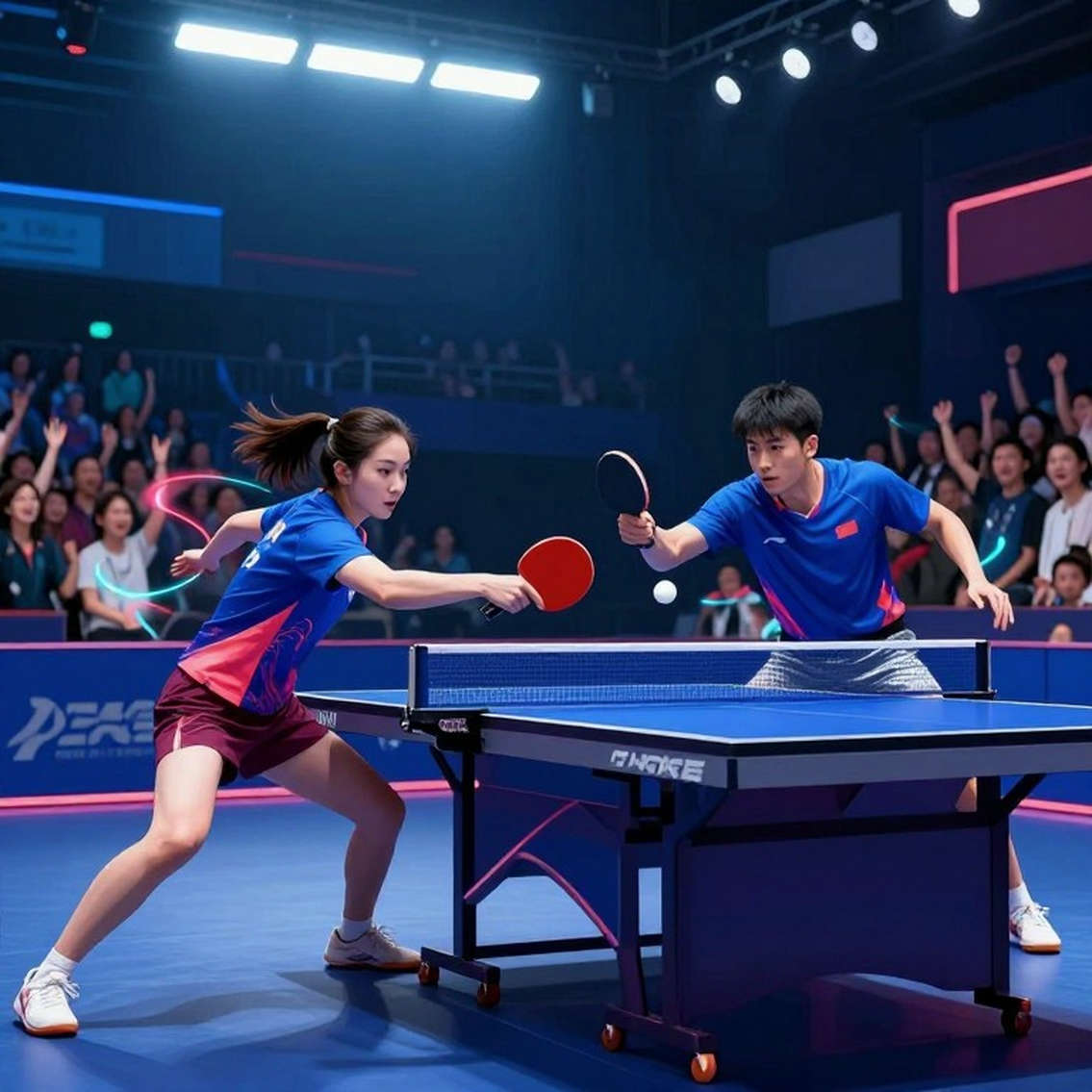
In a bulletin that circles almost entirely around fixtures and broadcast channels, that name is the only detail carrying a second layer of meaning. I have tracked Asian table tennis across many cycles, and I have sat in front of the screen long enough to know that Chinese brands do not name clubs just to decorate a signboard. They are planting a seed down at grassroots level, where European giants like Butterfly and Stiga believed they had safely locked down their territory.
The announcement from Table Tennis England — the English national governing body — is purely operational. It lists four rounds of fixtures, a broadcast channel, and a few lines of promotional copy. There are no performance statistics, no player names, no technical-tactical information, and no connection to the international points system. For an analyst, it is a document almost empty at the competitive layer. Read at the industry layer, however, it tells a different story.
The real value of this bulletin lies at the industry layer — how a Chinese equipment brand embeds itself in English club identity, and how a national association chooses to trade direct revenue for audience reach.
The eight Premier Division clubs stretch across three territories of the United Kingdom. BATTS is based in Harlow, Essex. Ormesby in Middlesbrough. Fusion in London. Nottingham and eBaTT are also English representatives. Ormeau comes from Belfast, Northern Ireland. North Ayrshire comes from Scotland. And DHS Hurricane Kingsway is the newly promoted newcomer. This distribution shows that the BCL is one of the few team-competition structures crossing the boundaries between the constituent nations of the United Kingdom — a detail I will return to when discussing the development pathway.
The fixture list shows four rounds compressed into two days: two rounds on Saturday 26 September, two rounds on Sunday 27 September. A single venue — BATTS, Harlow — hosts the entire weekend. For an association operating on a modest commercial scale, this scheduling is sensible: it cuts travel costs, increases matches per match-day, and concentrates spectators at one location to optimize broadcast production. This is economic logic, not purely sporting logic. And it raises the question of what decides results: when every team must play four matches in two days, squad depth and rotation matter more than the form of any individual.
The match chosen for streaming in Round 1 is the clash between Ormesby — reigning champions — and DHS Hurricane Kingsway — the newly promoted debutants. This is a deliberate editorial choice. The organizers understand that a title-holder versus newcomer tie always carries stronger narrative pull than any other pairing on opening day. But behind that choice, I read a deeper signal: this is the first time a club bearing a Chinese equipment brand's name has entered the top stage of English team table tennis, and it has been scheduled against the champions themselves.
This serve is not loud. It is not a blockbuster transfer, not a blaring media statement. It is just a name on a list of eight teams. But as I often tell the people I make podcasts with: a revolution always begins with a forgotten number. Here, what has been forgotten is the position of a Chinese brand inside the identity of an English club.
The second notable operational detail is the decision to broadcast for free. Each round features one match streamed live on YouTube, without a paywall, without a subscription requirement. The association also maintains a presence on Instagram, Facebook and the TT Leagues platform. Structurally, this is an organized content ecosystem, not ad-hoc coverage.
For a league with no television rights revenue, free streaming is a calculated gamble. You give up direct income from viewers in exchange for reach, and that reach becomes a bargaining chip with sponsors. Viewership is not the product — it is the evidence. A national association cannot sell tickets to paying viewers, so it sells access to brands that want exposure. That is the reason names like DHS Hurricane Kingsway exist.
There is another small detail worth reading slowly. Only one match per round is streamed, not all eight matches in each round. That speaks to production-resource limits. An association on a modest budget cannot stage live coverage for all four rounds across two days. It picks one match, invests quality in it, and uses it as a doorway to pull viewers into the system. This is common practice among domestic leagues seeking to prove commercial value before expanding.
What is notable is that this bulletin delivers no competitive information whatsoever. No technical metrics, no head-to-head data, no player names. For an analyst, that is almost a dead end. But the emptiness itself is data. It shows what tier English team table tennis positions itself in: a semi-professional competition system centered on participation and presence, not on elite performance as its selling point.
The BCL sits outside the WTT and ITTF ranking system. Results here do not affect world ranking, do not affect Olympic or international-tournament qualification. It is a purely domestic arena — and precisely for that reason, its value cannot be measured by the rankings.
This matters because it explains why the bulletin is empty at the competitive layer. A league whose results feed no international points system has no need to supply deep data to international media. It serves domestic audiences, serves the club community, and serves brands that want to reach that community. In other words, the bulletin answers on its own the question of where the BCL sits on the world table tennis map: at the base layer, not the top.
The only systemic risk identifiable is the commercial sustainability of a free-to-view league. With no viewer revenue, operating costs must come from sponsors and naming agreements. The arrival of DHS Hurricane Kingsway is exactly an example of that model: buying presence in exchange for covering costs. But for the same reason, if sponsorship flow stops, the league loses its pillar.
In the course of tracking international competitions, I have documented how Chinese brands build overseas presence. At the elite level, they sign stars. At grassroots level, the strategy is entirely different: they attach their names to local clubs, to participation events, to places where brand loyalty is formed when a player first picks up a paddle. It is a long-horizon game, and almost nobody notices until it has already taken root. A great machine does not break in a single night; it cracks across countless silent seasons — and in reverse, an empire is not built in one night either; it grows from countless small names inserted in places few people look.
The language of the bulletin is standard promotional copy: huge clashes, every team wanting to start with a win. For an analyst, such sentences have no predictive value. But they are not the problem. The problem is that readers may forget this is an operational announcement, not a capability assessment. A champion-versus-newcomer clash is called huge, but huge here means narratively huge, not competitively huge — because we have not a single metric to speak about the actual level of either side.
One point I want to make clear, because it is often overlooked. English team table tennis is not a stage for international stars. It is where leading semi-professional and amateur players compete for their club colours. Its value lies in community, in the promotion pathway a club like Kingsway has just travelled, and in its ability to retain players outside England's main development hubs. The presence of clubs from Northern Ireland and Scotland suggests the BCL may be one of the few competitive structures that keeps players in peripheral regions motivated to compete at a high domestic level. If that structure disappears, players in Belfast or Ayrshire will have far fewer reasons to stay committed to competitive table tennis.
What I will track through the 2026/27 season is not the result of any single match — those will pass and be forgotten. I will track two numbers. First, whether the number of streamed matches per round grows. Second, whether more clubs adopt equipment-brand names. If both rise, that is a signal of capital flowing into the grassroots of English table tennis. If only one rises, the story is more complex: either audience reach is growing without attracting brands, or brands are investing without generating reach. Both scenarios are far more worth watching than a win on opening weekend.
Data does not lie, but the story behind it is the truth. And in this case, the story behind a three-word name on a list of eight teams is far more interesting than any prediction about opening-weekend results.
Today's victory is merely a footnote of history, not the final page. What remains after the opening weekend is not who won or lost, but which name is still on the signboard when the season closes — and whether the audience still remembers it when the next season begins.