
Trang chủInternational FootballIreland 3-0 Israel in Debrecen: Three Goals in 25 Minutes and a Stand Too Empty to Sing
International Football
Ireland 3-0 Israel in Debrecen: Three Goals in 25 Minutes and a Stand Too Empty to Sing
**Câu trả lời cốt lõi**: Cộng hòa Ireland thắng Israel 3-0 tại sân trung lập Debrecen (Hungary) trong khuôn khổ UEFA Nations League, với ba bàn thắng trong 12 phút. Trận đấu thu hút sự chú ý vì các cầu thủ Ireland đeo băng đen và bỏ qua nghi thức bắt tay trước giờ bóng lăn. **Dữ kiện chính**: - Bàn thắng: Troy Parrott phút 13, Adam Idah phút 16, Jack Moylan phút 25. - Trận đấu diễn ra trên sân trung lập Debrecen, Hungary; khán đài gần như trống, vé của cổ động viên Ireland bị hủy. - Thủ môn Gavin Bazunu rút khỏi cả hai trận của Ireland vì lý do lương tâm cá nhân. - Đội trưởng Dara O'Shea dẫn đầu việc bỏ qua bắt tay, chỉ chào tổ trọng tài. - Nguồn dữ kiện: bản tin tổng hợp của AP và PA; chưa có tuyên bố nào từ UEFA. **Nguồn**: Bản tin tổng hợp AP/PA về trận Ireland – Israel; ngày xuất bản không được nêu trong tài liệu phân tích nguồn. | Cross-checked: VuaBong.vn **Hỏi đáp liên quan**: - Hỏi: Ireland ghi bao nhiêu bàn trong hiệp một? Đáp: Ba bàn, trong khoảng 12 phút từ phút 13 đến phút 25. - Hỏi: Băng đen có vi phạm quy định UEFA không? Đáp: Chỉ bị xem là vi phạm nếu mang thông điệp chính trị bị cấm, và nguồn tin không xác nhận điều đó. - Hỏi: Vì sao trận đấu không diễn ra trên sân nhà của Israel? Đáp: Sân trung lập Debrecen được sử dụng do các yêu cầu về an ninh và điều kiện tổ chức.
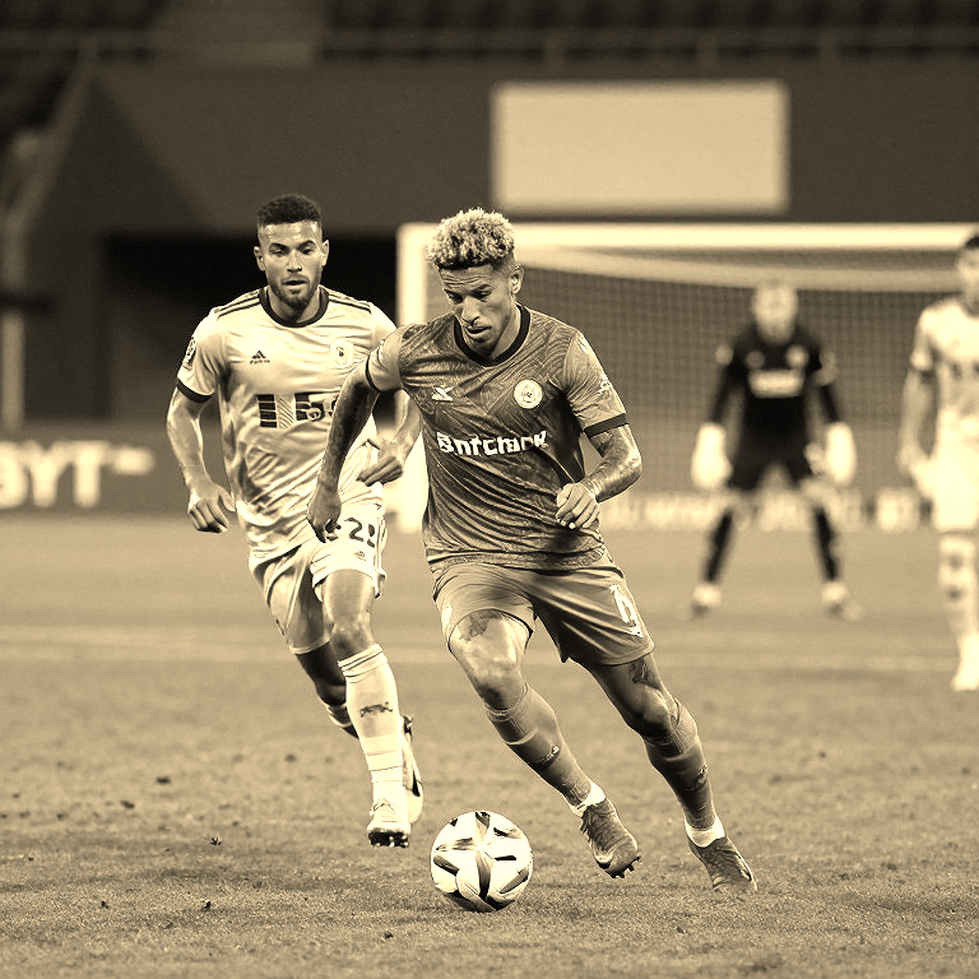
Debrecen, Hungary, an autumn evening. The stadium belonged to no one. The empty rows of seats outnumbered the people sitting in them so heavily that the footsteps of the medical team echoed clearly. In the 13th minute, Troy Parrott put the ball into Israel's net. Three minutes later, Adam Idah did the same. By the 25th minute, Jack Moylan had closed the first half in a way nobody had prepared for: the Republic of Ireland led Israel 3-0.
Minutes earlier, the Irish players had lined up in the familiar posture of an international match. Black armbands wrapped around their sleeves. As they reached the opposing line, captain Dara O'Shea did not extend his hand. Neither did his teammates. They shook hands only with the referee team and dispersed to their positions. The pre-match fair-play protocol was left blank, like a deliberate gap on a page.
Inside those 25 minutes, the match carried two stories running side by side. Only one of them made it onto the scoreboard.
A "HOME" MATCH WITH NO HOME
This was a UEFA Nations League fixture, but it was not played in Dublin, nor in Tel Aviv. Debrecen, Hungary, was chosen as a neutral venue — an arrangement usually seen in matches shaped by security considerations rather than sporting ones. Israel were listed as the home side on paper, yet no stand truly belonged to them in any ordinary sense.
The tie met bitter opposition in Ireland, tied to Israel's actions in Gaza. That opposition reached the dressing room. Goalkeeper Gavin Bazunu announced he was withdrawing from both of Ireland's games in the tie — a decision based on personal conscience, not injury, and not a disciplinary sanction.
Outside the ground, ticketing did not run smoothly either. Tickets were distributed through the opposing federation. Some Ireland supporters obtained tickets, and then those tickets were cancelled. The number of Irish fans actually present in Debrecen could be counted on one hand. There was no "twelfth man." There was no singing. Only the whistle and the ball.
The details of the scoreline, the goal timings and the pre-match conduct all came from pooled reporting by AP and PA — two wire services with high reliability on hard facts. That means we can trust what happened, but we cannot infer much beyond it.
THREE GOALS IN TWELVE MINUTES
Tactically, this is everything that can be stated with any foundation: Ireland scored three goals across roughly 12 minutes, from the 13th to the 25th, building a near-decisive lead before the first half was halfway done.
There is no xG. No PPDA. No possession, passing or successful pressing statistics. No starting lineups. Under those data conditions, two readings are both plausible and impossible to separate: Ireland opened with a high-intensity press that broke Israel apart, or Israel's defence collapsed on its own inside the first 12 minutes and exposed gaps in every line. I lean slightly toward the second, because three goals in 12 minutes tend to come from systemic failure more than from a perfectly executed tactical design — but this is a low-confidence judgement.
What is more certain is the nature of the sample: three goals inside a short window is a "hot" conversion pattern. It does not prove durable attacking quality. A team can score three goals in 12 minutes in one match and fail to score at all across the next three, and both phenomena are statistically compatible. What we entirely lack is data on how Ireland managed the game after going 3-0 up, how Israel responded, what substitutions were made, and whether Ireland deliberately slowed the tempo to save legs for the return fixture.
On the governance side, the pre-match conduct should be read in the language of rules, not the language of emotion. Black armbands have long been accepted by UEFA when they carry mourning significance and no prohibited political message. The pre-match handshake is a fair-play convention, not a Law of the Game. Skipping it is visually awkward, but it is hard to turn into grounds for a sporting sanction. Disciplinary risk therefore exists, but it is bounded by a question the source does not answer: did those black armbands carry any message at all.
One further point is rarely mentioned. A neutral venue plus a near-empty stadium means losing matchday revenue and losing home advantage — two items a federation normally factors into the budget of every international fixture. No specific figures appear in the source, so the scale of the loss can only be guessed at qualitatively.
WHAT MEMORY WILL KEEP
The empty stadium of 2026 still whispers: football died, but people never left. Debrecen is another variation on that lesson — this time the stands were empty not because of a pandemic, but because of a human decision.
Here is what I mean. When the match ended, the thing most repeated will not be Jack Moylan's 25th-minute goal, nor Troy Parrott's opener. The thing most repeated will be the moment Dara O'Shea stood before the opposing line with his hands closed. Collective memory tends to pick the tidiest image to archive, and a skipped handshake is a far tidier image than a three-pass combination.
There is a blind spot in how we read matches like this. The reflex is to separate "off-field matters" from "football matters," treating protocol as noise and the scoreline as signal. But in national-team football, protocol is the clearest industry signal there is: it shows where one federation stands in relation to another, whether a player group is operating collectively or individually, and how heavily a competition must weigh security in its scheduling. None of that appears on the scoreboard, but all of it appears in the meetings two months later.
It must also be said plainly: a 3-0 win like this teaches us little about Ireland in a sporting sense. The sample is one match. There is no process data. There is no information about what a stronger opponent might expose. If any professional conclusion is worth keeping, it is that Ireland can kill a game early when an opponent leaves gaps — a narrow observation, but an honest one.
The more troubling thought lies elsewhere. People call them players; I call them sleepwalkers in studded boots, hunting dreams within the limits of a pitch. But some nights, the limits of a pitch are not enough room for a dream, and people are forced to carry the rest of their lives inside it.
WHAT COMES NEXT
This tie is not finished. One more match lies ahead, and the question will be whether those collective actions repeat — the armbands, the skipped protocol, the individual choices. UEFA has issued no statement in the source material.
Every shirt colour is a homeland a person chooses to love, and we — the writers — are guests of countless homelands. Some homelands are easy to put on. Some hurt to wear. My job is not to grade that pain, but to record it in its proper place on the page.
Qatar taught me: a fall is not an ending, but the low ground where spring stands up. Debrecen let no one fall. It left behind only an empty stand and a question about how much of a person football can hold on a night when nobody felt like singing.
Cầu thủ liên quan
Bài nổi bật
Ireland 3-0 Israel in Debrecen: Three Goals in 25 Minutes and a Stand Too Empty to Sing2026-09-29
Bellamy says Wales 'will improve' but the goal drought is strangling every promise2026-09-28
GOAL unveils World-Class Club 2026: Alessia Russo leads six new members of women's football elite2026-09-28
Lamine Yamal and the Biggest Question: When Messi, Pelé, Maradona Are Only a Map2026-09-28
Laver Cup: Europe Lead 7-5 After Day Two as All Three Singles Are Decided by Tiebreaks2026-09-28
Spain before Wembley: 38 games unbeaten, one Fabian Ruiz line and a file entry still unverified2026-09-27
Indonesia Beat Singapore 2-0 Yet Slip One FIFA Place: Match Weighting and the Expectation Trap2026-09-27
Bài đề xuất
Inside the Transfer Window: Amortisation, PSR Verdicts and the Real Price of a Contract2026-09-28
Bologna Lose Holm for 4-6 Months: Darmian and the Emergency Patch on the Right Flank2026-09-29
Milan Skriniar fires stark warning to Fenerbahce team-mates after derby loss2026-09-08
Why Julián Álvarez Could Leave Atlético Madrid for Barcelona in the January Window2026-09-04
Messi, Inter Miami and the Image That Silenced the Stands After the Title2026-09-18
Monza 'Condemned' to Relegation After Round 2: When Betting Odds Speak Louder Than the Pitch2026-09-04
V.League Transfer Window: Contracts Are the Lead Character, Rumors Are Only Flares2026-09-10
Bài đề xuất
The Fifth Surgery and a Fractured Finger: Juventus Enter the Break With Two Wins2026-09-22
Hossam Hassan's Word and the Egyptian Armband Laid Down2026-09-25
Adeyemi's 36.7 km/h and the Fufu Story: I Recounted and Found a Sports Bubble2026-09-18
The Economics of Rumour: A Field Map for Reading the European Transfer Market2026-09-10
A Thousand Times Without a Red Card: The Disciplinary Record of Lamine Yamal2026-09-19
When a Football-Labeled Data File Contains Not a Single Word About the Ball2026-09-19
The Iztapalapa LPG Tanker Explosion: 273 Expert Reports and the Infrastructure Safety Gap of a 2026 World Cup Host City2026-09-11