
2026 U.S. Open Table Tennis: 118 Events, Six Days, and the Operational Logic Behind Mandalay Bay
**Core answer**: The 2026 U.S. Open Table Tennis Championships is the USATT national championship, held December 16–21, 2026, at Mandalay Bay in Las Vegas, featuring 118 events over six days. Entry requires Gold or Lifetime USATT membership valid through December 21, 2026, and registration closes December 1, 2026. **Key facts**: - Dates: December 16–21, 2026, six days, at Mandalay Bay, Las Vegas Strip. - Format: 118 events including open singles, age groups, juniors, rating, para, hardbat, sandpaper, Parkinson's, family doubles. - Eligibility: Gold or Lifetime USATT membership, valid through December 21, 2026. - Deadline: registration closes December 1, 2026; some events may fill earlier. - Logistics: hall open 8 a.m.–9 p.m.; finals December 20; finals seating first come, first served. **Source attribution**: USATT event announcement on the 2026 U.S. Open, published ahead of the December 2026 tournament. Cross-checked: VuaBong.vn **Related Q&A**: Q: Is the 2026 U.S. Open a world-ranking event? A: No — it is a domestic USATT championship operated on internal ratings, with no stated world ranking points or prize money. Q: What is hardbat at the U.S. Open? A: A heritage category using pips-out hard rubber without sponge, producing minimal spin and a flat-driving game. Q: What is the biggest practical risk for participants? A: Missing the December 1, 2026 registration deadline or the Gold/Lifetime membership requirement, since capacity is limited and events can fill early.
Late November, I left the USA Table Tennis registration page open in a browser tab all afternoon while I re-wound the footage of an U18 quarterfinal in Busan. The 2026 U.S. Open event list was long enough that I had to scroll three times to reach the end: 118 events spread across six days, from December 16 to 21, 2026, at the Mandalay Bay resort on the Las Vegas Strip.
What made me stop was not the number 118. What made me stop were the lines tucked among the list: hardbat. Sandpaper. An event for people living with Parkinson's disease. A doubles event for generations of the same family. A national championship placing hardbat next to open singles — and that tells a scout more than any promotional line.
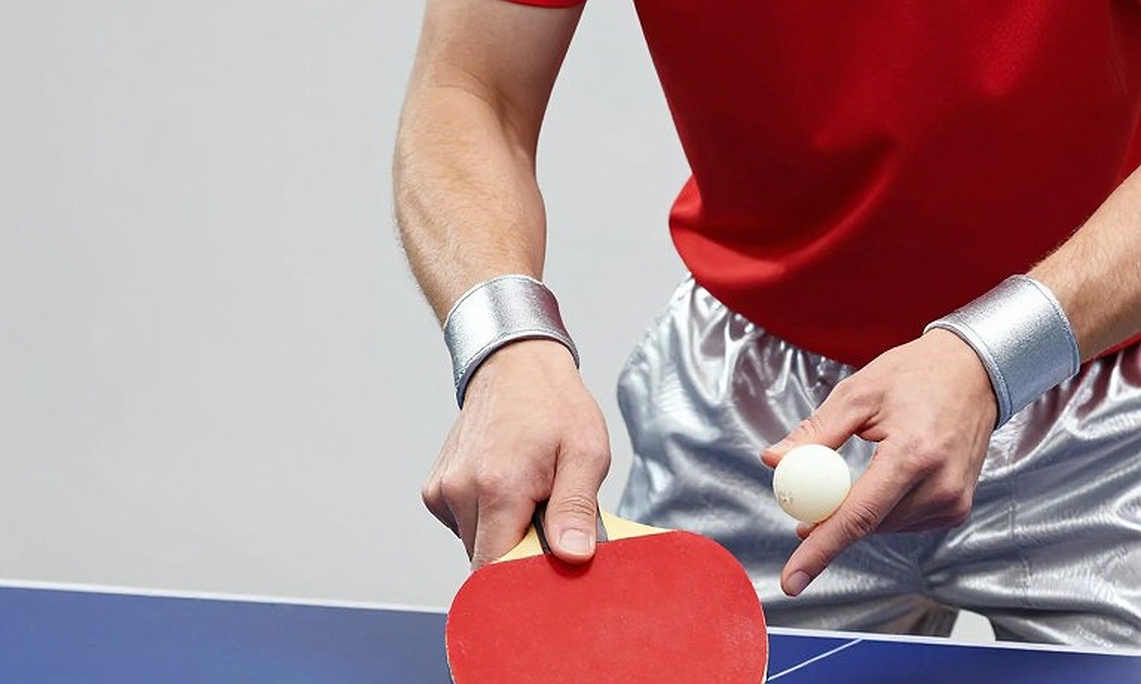
A rough gem never speaks for itself; the excavator has to know how to listen. Sometimes that means listening to the way a host chooses to arrange its own event categories.
Context: where a national championship sits on the world map
The U.S. Open is the national championship of USA Table Tennis, the national governing body for the sport in the United States. The 2026 edition runs for six days at Mandalay Bay, a large resort located directly on the Las Vegas Strip. The organisers describe it as one of the biggest weeks on the U.S. table tennis calendar, and the finals are presented as a showcase of some of the best table tennis in the country.
That event needs to be placed correctly. World table tennis runs on a fairly clear order: China holds the dominant tier; Japan, Germany, South Korea, Sweden and France form the chasing group; India, Brazil and Egypt are the emerging forces; everyone else, the United States included, sits in a regional tier. The U.S. Open belongs to the domestic national tier. It is not a stop on the WTT circuit. The announcement never mentions world ranking points and never mentions prize money. The competition is organised around USATT's internal rating system and age groups, not around a single-elimination championship draw.
The timing also matters. December 2026 sits roughly two years before the Los Angeles 2028 Olympics, a window in which any host federation has an incentive to push domestic publicity. The announcement makes no reference to the Olympics at all. But a careful reader can feel that backdrop sitting behind it.
In South Korea, where I live and work, a national championship announcement usually opens with the names of national team players, with selection slots, with selection mechanisms. The U.S. Open announcement opens with the hall opening hours. That difference is not a matter of style. It is a matter of what the event fundamentally is.
Core: reading 118 events the way you read a scouting report
I make it a habit to watch at least three matches of footage before writing anything about a young player. This is not a match, so I applied a different version of the same discipline: cross-check the event categories against the operational indicators, and only then settle on a judgement.
The first thing worth stating plainly: 118 events across six days is not the mark of an expanded elite tournament. It is the mark of an event designed for a large participant base. Those are two entirely different things. A WTT event adds categories to serve more professional players. A national championship adds categories to serve more kinds of players. The U.S. Open list makes the second logic visible: open singles, age-group singles, junior events, rating events, para competition, hardbat, sandpaper, a Parkinson's category, and family generational doubles.
Start with hardbat, because it is the most easily skimmed item and also the most informative. Hardbat is a style from the era before sponge rubber existed: pips-out hard rubber on both sides, with no sponge layer. The technical consequences are concrete: spin generation is almost entirely removed, the ball is struck flat, and the game shifts toward flat-driving, placement and control. It is a heritage branch, not a technical-development branch. No player uses hardbat as a launchpad for a modern career.
Sandpaper goes further still. The racket surface is sandpaper, and the format leans hard toward fun and accessibility. It exists so that a beginner can step onto the floor, so that a ten-year-old can share a table with a forty-year-old without being crushed technically. It does not exist to create a school of play.
So when I read the U.S. Open list, I do not see a signal about American table tennis technique. I see a two-peak distribution of players: a serious competitive group in the rating and age-group events, and a group playing for heritage, community and enjoyment, coexisting inside one tournament framework. These two groups do not compete with each other. They share a hall, a credential system and a host organisation.
That leads to the second point, which I consider the single most important item in the entire announcement.
Entry eligibility is not an administrative detail. It is the event's real selection mechanism. Players must be current USATT members at the Gold or Lifetime tier, and that membership must remain valid through December 21, 2026. No exception is stated. No case-by-case review process is offered. It is a binary test: you hold the card, or you do not.
For newcomers, that is a genuine barrier. An amateur player in Ohio or Texas, good at a local club, could miss the tournament purely because they did not know they needed to upgrade their membership first. And when you see the event set Gold or Lifetime as the minimum threshold rather than a cheaper general tier, a fairly natural hypothesis appears: the tournament is being used as a lever for membership-tier conversion, not purely as an open playing field. That is an inference, not something the announcement states, so I keep it as a high-probability hypothesis rather than a settled conclusion.
The third item is the credential system, and it too is purely operational. Players need a Player Credential to enter the playing hall. Spectators without one must buy a Day Pass or a Full Tournament Pass. Finals admission is included with a valid credential, or with a Day Pass for December 20, and seating is first come, first served. I read those three lines and immediately pictured the crowding at a final advertised as a showcase of the country's best, with fixed capacity and no advance seating mechanism.
The fourth item is timing, and this is the actionable one. The tournament runs six days. The hall opens from 8 a.m. to 9 p.m. Open practice and on-site registration run from 3 p.m. to 8 p.m. on December 15. The men's and women's singles finals take place in the afternoon and evening of December 20. The registration deadline is December 1, 2026, and the announcement warns clearly that some events may fill before that deadline.
I once wrote a piece praising a young U18 midfielder's distribution based on a 92 percent passing accuracy rate, and three months later I watched him get completely shut down in a final. The lesson was never to settle a judgement on a single metric. Here, the single metric is the December 1 deadline. On its own it does not tell the whole story, but combined with the early-fill warning it produces the clearest signal in the whole announcement: capacity is limited and there is no priority mechanism, so the timing of registration becomes a genuine competitive variable. Registering late is not an inconvenience. Registering late means losing a slot.
In the same cluster, the announcement tells players not to assume their competition is concentrated on one day. A warning like that only appears when organisers have already watched participants misjudge their schedules. With a six-day tournament running from 8 a.m. to 9 p.m., accommodation costs, flights and physical stamina become part of the competitive equation, not a side matter.
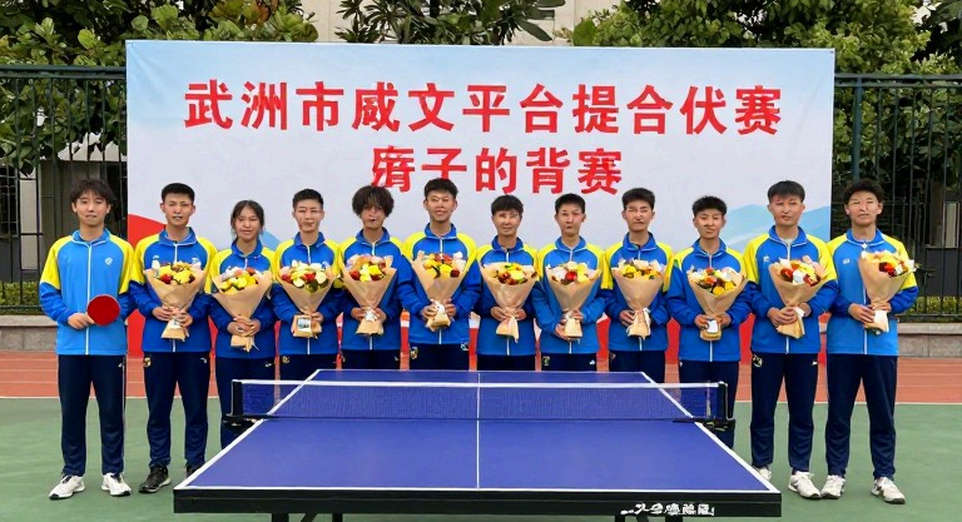
The fifth item is the venue. Mandalay Bay sits on the Las Vegas Strip. The announcement tells participants to book accommodation early and suggests there is plenty to explore nearby. That is a tourism sentence, and it is deliberate. When you place a family-oriented, multi-generational, multi-age tournament inside a casino resort on the Las Vegas Strip, you are coupling a sports event to the tourism and hospitality ecosystem, turning a table tennis tournament into a family trip with competition in the middle. The revenue does not come only from entry fees. It comes from hotel rooms, meals, admission passes, and extended stays.
This is where I have to remind myself not to over-read. A national championship in a country outside the leading group does not need to carry any grander mission than running a good week for a few thousand players. But read as an operations document, a fairly clear model emerges: capped registration that can fill early, membership gated at a high tier, tiered credentials, and a tourism-linked venue. Those four elements add up to a system optimised for participant volume and revenue, not for talent identification.
The contrarian angle: the medal and the headcount
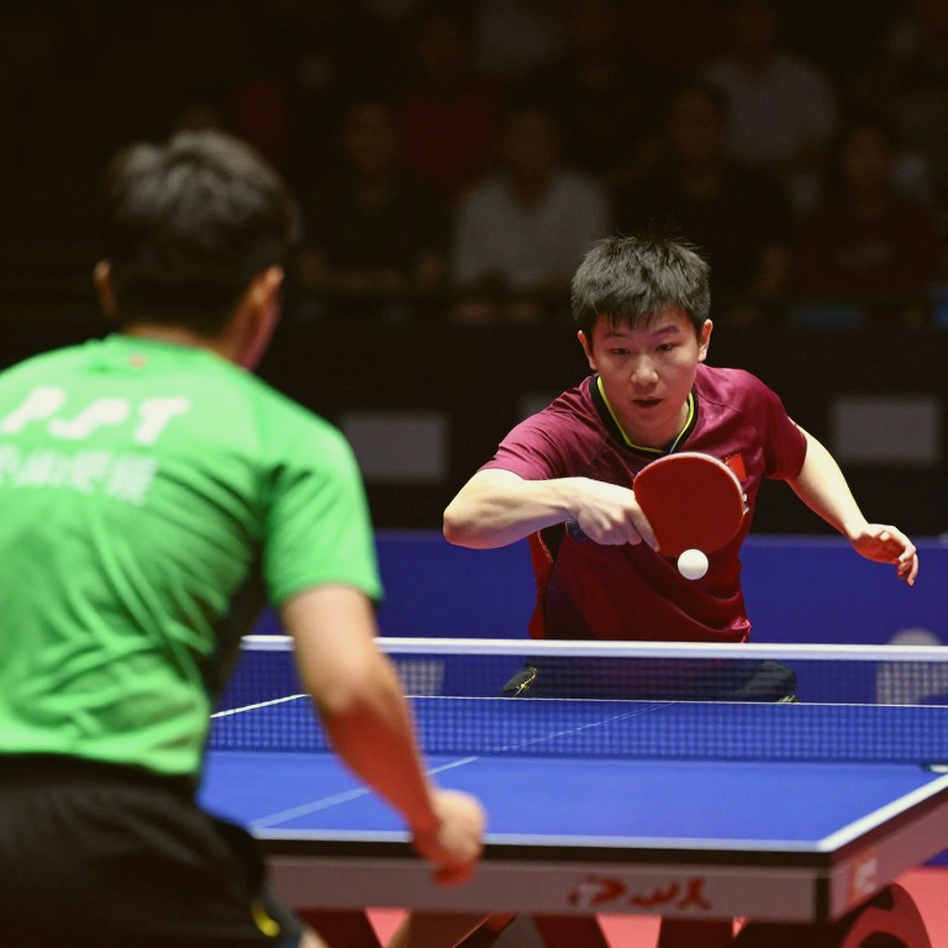
Two sentences in the announcement carry evaluative weight. One says players come from across the country. Another says the finals will show some of the best table tennis in the country. I read the second one and set it aside. It is a promotional sentence, not a verified conclusion.
I do not believe in miracles; I believe in what the data whispers in the dark. And the data here says something fairly cold: a national championship that names no athlete at all. Not one name. Not one ranking. Not one notable matchup. No prize money. No world ranking points. For an event called a national championship, that absence is meaningful. It shows the organisers chose to sell participation, not stars.
This is where the cross-cultural lens becomes useful. In China or South Korea, a national championship that announces no national team slots and links to no selection mechanism is almost unimaginable. National championships in those two countries exist partly to answer a question: who moves up to the national team. Here, that question is never asked. And that is the easiest thing to misread.
People easily confuse breadth with strength. A table tennis nation with 118 events, para categories, a Parkinson's category, family generational doubles, and thousands of people holding rackets over six days — that is a formidable grassroots base. But the breadth of a base says nothing about the conversion efficiency from mass participation to elite performance. Those are two different indicators, and the announcement supplies only the first.
I once wrote a nineteen-page report on a young striker, showing an expected assists figure of 0.38 per match alongside a 71 percent miss rate on shots. The report was swept off the desk. It was not wrong. It simply did not match what people wanted to hear at the time. A failed report today can be tomorrow's winning formula — but only if the reader is patient enough to accept that data does not rearrange itself to suit their wishes.
The same applies here. This announcement is not a scouting document. It is an operations document, and read as an operations document it is quite good: clear, deadline-bound, with an advance warning about fill risk and transparency about membership conditions and credential tiers. Read as a statement about the level of American table tennis, it will be empty. A reader needs to know which document they are holding. From another angle, the biggest risk that all four of my scenarios point toward is administrative rather than technical: a player discovering the Gold or Lifetime membership requirement too late, after the December 1 deadline has closed. No injury, no rule reform, no selection controversy. Just a card and a deadline.
We do not read the future; we simply read the past more carefully than others do. The past of American sport, across many disciplines, shows the same operating pattern: a wide mass system, a narrow elite conversion system, and a home-Olympic window as a chance to narrow that gap. That window is open. The answer is not in yet.
What to watch
I will come back to this data at the end of the year. There are three concrete indicators I want to see.
First, the fill rate. If popular events close registration before December 1, that is evidence demand exceeds supply and the organisers have room to expand. If most events still have space close to the deadline, that is the opposite signal.
Second, movement on membership rules. If USATT lowers the membership tier threshold or adds a temporary pathway for newcomers, the entry barrier changes and the participant structure changes with it.
Third, how the federation talks about Los Angeles 2028 in later announcements. If Olympic-development language appears, the national championship will be repositioned, and only then will it become something worth reading through a scout's eyes.
For now, what I keep after scrolling through all 118 events is an unanswered question: a country can stage a week of table tennis at that scale for thousands of players across every age group, every level of physical ability, every generation of a family — can that base produce a player good enough to stand in an Olympic semifinal. The breadth has evidence behind it. The depth does not, yet.